Adventist Church
446 N. Whipple St., Fort Bragg, CA 95437 — Documented at the corner of Whipple and Pine Streets as early as 1923, the Fort Bragg Seventh-day Adventist Church has been part of the community for more than a century. Beyond worship, its history includes religious education, food and clothing assistance, and personal accounts of providing temporary shelter to people struggling to find housing.
Last updated: October 19, 2026
Overview
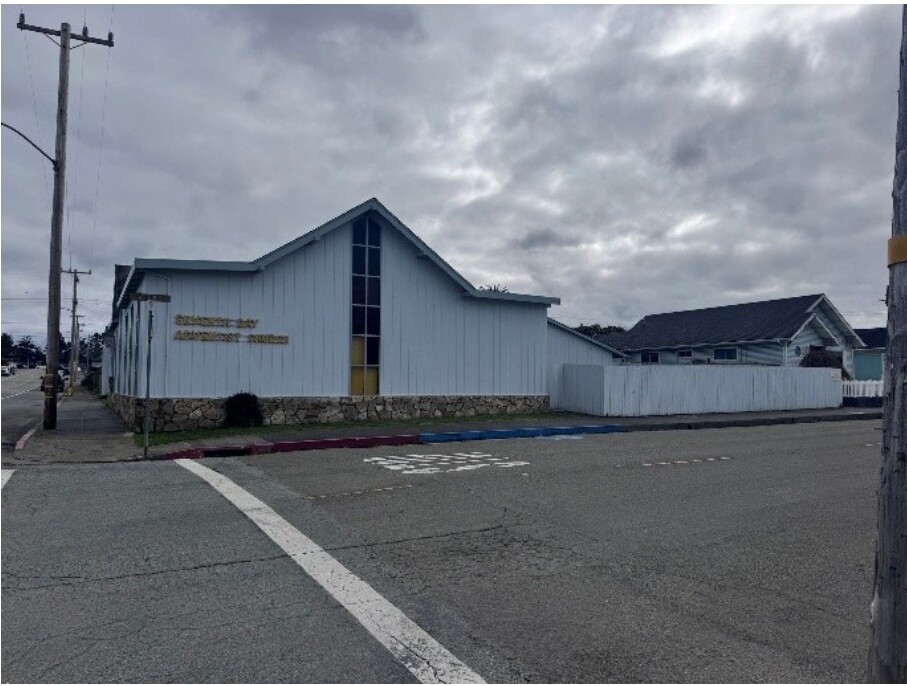
The Fort Bragg Seventh-day Adventist Church at 446 N. Whipple Street is one of the city's longstanding religious institutions, with a documented connection to this location dating to at least 1923.
The congregation belongs to the Northern California Conference of Seventh-day Adventists and holds Saturday worship services.
Community recollections describe a small, dedicated congregation whose activities have extended beyond worship to include education, charitable assistance, and temporary shelter during difficult times.
Although the congregation's presence at this corner is documented for more than 100 years, the construction date of the present church building has not been established.
Location
446 N. Whipple Street stands at the corner of North Whipple and East Pine Streets, east of Fort Bragg's Main Street and Franklin Street commercial districts.
The church occupies a residential neighborhood where its longstanding presence has made it a familiar local landmark.
Unlike many downtown properties that have changed businesses repeatedly, this corner has remained associated with the Seventh-day Adventist congregation since at least the early 1920s.
History
Early Congregation and the Whipple Street Church
The earliest located documentation of the congregation at this corner appears in the 1923 Seventh-day Adventist Yearbook, which lists the Fort Bragg church at Whipple and Pine Streets.
The 1924 edition repeats the same location, confirming the congregation's presence more than a century ago.
These records establish the church's early connection to the property but do not identify when the present building was constructed or whether earlier structures occupied the site.
Over the decades, the congregation continued providing Sabbath worship, Bible study, fellowship, and community assistance.
Religious Education
Education has been another important part of the congregation's history.
The former Ft. Bragg Seventh-day Adventist school operated at 22850 N. Highway 1, north of town near the Virginia Creek area.
School listings identify the institution as closed in 2004.
A longtime church member recalled that the congregation retained ownership of the former school property and later rented it to a charter school.
The same recollection indicated that declining numbers of school-age children had ended the congregation's own school operations and that selling the property might eventually be considered.
These details reflect the member's account at the time. Current ownership, leasing arrangements, and any future sale have not been independently established.
Community Food and Clothing Assistance
The church has long been associated with helping residents facing financial hardship.
Fort Bragg Library community-resource information identifies Adventist Community Services at 446 N. Whipple Street as a food-assistance location.
Other local resource listings identify clothing assistance through the church, including a community clothing closet offering clothing and shoes.
Community recollections describe members distributing free food and clothing and assisting residents whenever resources allowed.
Temporary Shelter in the Church Classrooms
One of the most personal accounts of the church's history concerns former classrooms used for temporary housing.
A longtime member recalled living in a church classroom between approximately 2014 and 2017, while other individuals occupied separate rooms.
According to the account, the local homeless shelter limited stays to six months, leaving some people without housing before they could secure permanent accommodations.
The Hospitality Center reportedly lacked additional rooms at the time, and the congregation allowed several individuals to stay in unused classrooms.
The member described the arrangement as an important source of stability while searching for permanent housing.
The same person recalled being required to leave the church shortly before moving into an apartment, reportedly because residential occupancy of the church was not permitted.
This remains a firsthand account rather than a documented finding about city ordinances or building regulations. The precise circumstances and legal requirements have not been independently established.
The recollection nevertheless preserves an important example of the congregation's efforts to help residents experiencing homelessness.
Congregational Life and Changes
A longtime member whose family had attended the church since the 1970s remembered the sanctuary and classrooms remaining largely unchanged throughout the years.
Exterior painting and a replacement sign were among the more noticeable improvements.
The member described approximately 15 regular worshippers at the time of the original discussion, with the member's father serving as head elder.
Affordable housing also created challenges for pastoral staffing on the Mendocino Coast. The congregation was remembered as sharing pastoral responsibilities with Willits and relying at times on temporary arrangements.
Dr. Dean Jennings was recalled as regularly presenting sermons and helping sustain weekly worship.
Church information subsequently identified Pastor Jeb Bersabal and Head Elder Dr. Dean Jennings, with Saturday Bible study and worship services offered both in person and online.
Community Memories
The original Facebook discussions provide a personal perspective on the church's place in Fort Bragg.
One longtime member described the congregation as a hometown church, recalling family involvement beginning in the 1970s and an interior that had changed relatively little since childhood.
The most significant personal recollection concerned the unused classrooms that provided temporary housing between approximately 2014 and 2017.
The account described the difficulty of finding affordable housing after a shelter stay ended and the church's willingness to provide a place to stay during that transition.
The member eventually secured an apartment and remembered the congregation's assistance as an important part of that experience.
Other recollections highlighted the church's food and clothing programs, the former Adventist school north of town, and the dedication of a small congregation working to maintain its religious and community activities.
Together, these memories portray a neighborhood church whose importance to some residents extended well beyond Saturday worship.
Timeline
1923 — The Seventh-day Adventist Yearbook lists the Fort Bragg church at Whipple and Pine Streets.
1924 — The following year's denominational directory confirms the same location.
Twentieth century — The congregation maintains its religious, educational, and community-service activities in Fort Bragg.
1970s — Community recollections document family involvement in the congregation by this period.
2004 — School listings identify the former Ft. Bragg Seventh-day Adventist school at 22850 N. Highway 1 as closed.
Approximately 2014–2017 — A firsthand account describes unused church classrooms providing temporary housing for people experiencing homelessness.
2020s — Community recollections describe a small congregation continuing worship services and charitable activities while maintaining connections with the former school property.
2026 — The Fort Bragg Seventh-day Adventist Church remains listed at 446 N. Whipple Street.
Why It Matters
The Fort Bragg Seventh-day Adventist Church represents more than a century of religious and community history at the corner of Whipple and Pine Streets.
Its significance extends beyond the building to generations of families who worshipped there, children connected with its educational programs, and residents who received food, clothing, or other assistance.
The account of temporary shelter in former classrooms also reflects the challenges surrounding homelessness and affordable housing on the Mendocino Coast.
Despite changing membership, pastoral arrangements, and community needs, the congregation has maintained a longstanding presence in Fort Bragg.
Its history reflects continuity, faith, education, and community service, preserving an important chapter of neighborhood life beyond the city's commercial districts.
For more local history, photographs, and archived articles, explore the complete Fort Bragg History collection.
See the full archive: www.infortbragg.com
Sources & Original Research
This article blends verifiable historical records with personal recollections shared by longtime Fort Bragg residents. Much of this information comes from community memory and is not available in any published source.
Original Buildings and Businesses in Fort Bragg, California — With History Facebook posts and community comments (3 replies across two discussions).
Gee Bee's Adventures — original posts and community recollections.
InFortBragg.com — Adventist Church archival article, updated June 8, 2026.
Seventh-day Adventist Yearbook, 1923 and 1924 — denominational directories identifying the Fort Bragg church at Whipple and Pine Streets.
Adventist Organizational Directory — Fort Bragg Seventh-day Adventist Church listing and denominational affiliation.
Fort Bragg Seventh-day Adventist Church — church website, worship services, and congregational information.
Fort Bragg Library — Low-Income and Unconventionally Housed Resources, identifying food assistance at 446 N. Whipple Street.
City of Fort Bragg — community-service information identifying Adventist Church clothing assistance.
Mendocino Coast Children's Fund — community clothing resource information.
Private School Review — Ft. Bragg Seventh-day Adventist school listing, identified as closed in 2004.
Community recollections concerning congregational life, the former school, building changes, charitable assistance, and temporary housing in church classrooms. Personal accounts and historical details not independently documented are identified as recollections.
InFortBragg.com
