Fort Bragg Grange Hall
26500 CA-1 — A former one-room schoolhouse turned Grange hall in Inglenook, still holding community life together.
Last updated: July 19, 2026
An old rural schoolhouse that became a gathering place for farm families, breakfasts, elections, dances, potlucks, auctions, and renewed community activity.
Overview
Some old community buildings do not survive because they are beautiful. They survive because people keep finding reasons to gather inside them.
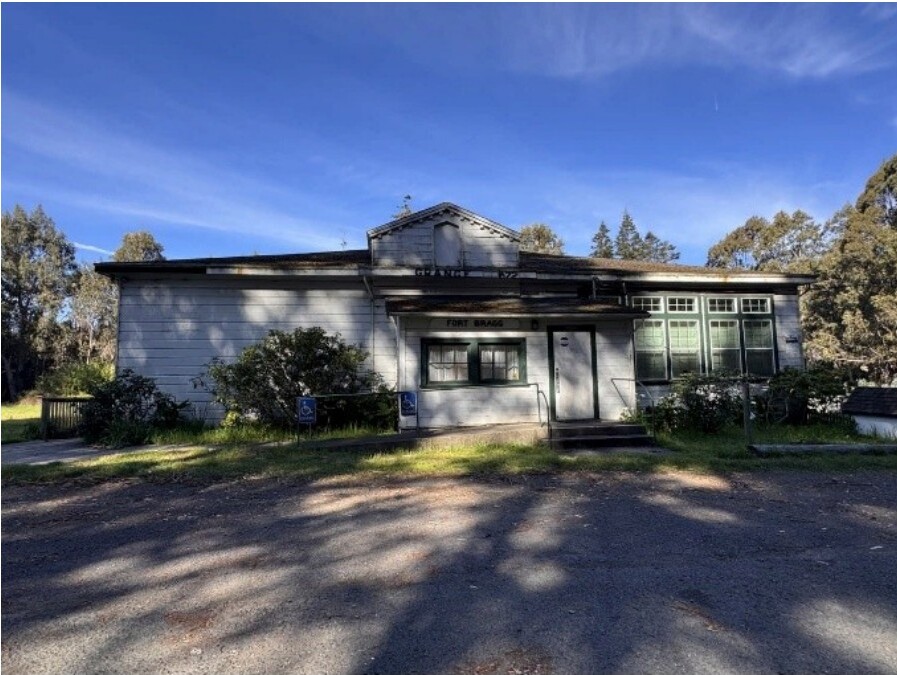
The Fort Bragg Grange Hall is one of those places. It stands beside Highway 1 in Inglenook, north of Fort Bragg, with the plain and practical shape of a building meant to hold meetings, meals, dances, elections, arguments, celebrations, and the ordinary business of rural community life.
Its history reaches back beyond the Grange itself. Historical accounts identify the building as a former one-room schoolhouse, linking it to the years when children from the surrounding area received their education close to home.
The building later became Fort Bragg Grange #672 and continued serving the community in a different way. Instead of school lessons, it became a place for farm families, neighbors, voters, dancers, volunteers, and anyone looking for a meal and a little conversation.
The Schoolhouse Years
The building's earliest known use was as a rural schoolhouse.
Historical references connect the present Inglenook Grange Hall with Ocean School, one of the small schools that once served children living outside Fort Bragg's central town area. Community histories of Inglenook also describe a local schoolhouse that later became the Grange hall.
That beginning explains much about the building's lasting importance. Rural schools were more than classrooms. They were among the few public buildings available to scattered families and often became natural gathering places for meetings, performances, elections, and community events.
When the school was no longer needed for regular classes, the building already had the size, location, and familiar public role needed to become a community hall.
Becoming a Grange Hall
The Grange gave the old schoolhouse a second long period of usefulness.
The Patrons of Husbandry, commonly known as the Grange, was formed to support farmers and rural communities. Local Granges provided education, cooperation, social events, civic participation, and a place where rural families could meet regularly.
Community memories describe monthly meetings filled with local families. The gatherings were not limited to formal business. They included potluck dinners, dancing, cake walks, auctions, meals, and activities intended for people of all ages.
The hall became a place where work, family, entertainment, and civic life came together under one roof.
Community Life
The strongest memories of the Grange Hall are not about the building itself. They are about what happened inside it.
Residents remember weekend breakfasts, especially pancake breakfasts that brought visitors and locals together around shared tables. The food was only part of the attraction. People came for conversation, stories, familiar faces, and the chance to sit down with neighbors they might otherwise see only while passing on the highway.
Others remember walking to the hall to vote or attending community sales and special events. Potlucks, dances, auctions, and cake walks gave rural families a regular reason to gather.
The hall did not need to be elegant. Its value came from being available.
Accessibility Improvements
The building continued serving the area well into the modern era, but its age created practical challenges.
A 2009 Community Foundation of Mendocino County account described improvements intended to make the hall more accessible and useful. The work included a new accessibility ramp, sidewalk improvements, and replacement chairs.
Those upgrades show that the hall was still active enough to justify investment. They also reflect the continuing effort required to keep an old rural building available to the entire community.
The Grange Dispute
The hall later became part of a much larger organizational conflict sometimes described as the California "Grange wars."
The dispute developed after a split between the California State Grange and a number of local chapters that separated from the statewide organization. Questions over names, property ownership, membership, and control of local halls led to years of legal and organizational conflict throughout California.
In Inglenook, the property became connected with the Fort Bragg–Inglenook Community Center during the dispute. Reporting on the conflict indicates that Fort Bragg Grange #672 eventually regained control of the hall.
This chapter helps explain why some residents remember the hall as inactive or stalled for a period of time. The building itself remained in place, but the organization and community activity surrounding it had been disrupted.
Renewed Activity
Recent community reports indicate that the hall is again being used and repaired.
New local members have been meeting, organizing events, and working to restore the building. A benefit potluck dinner and square dance was held in April 2026, with proceeds intended to help restore the hall.
The event included a family dance followed by an evening square dance, with instruction provided so that beginners could participate. That kind of gathering closely resembles the hall's earlier community role: food, music, dancing, fundraising, and people working together to keep the building alive.
Not every older tradition has resumed. Weekend breakfasts were remembered fondly, but residents noted that the long-running breakfast events had stopped years earlier. Even so, the renewed dances and benefit gatherings show that the hall is not merely being preserved as an empty historic building. People are again finding reasons to use it.
A Rural Gathering Place
The Grange Hall's location is part of its importance.
Inglenook is outside central Fort Bragg, and families living in the area have not always had many nearby public gathering places. The hall gave the surrounding rural community somewhere to meet without traveling into town.
It could serve as a dining room, dance floor, polling place, meeting room, fundraiser venue, and community center depending on what was needed. That flexibility allowed the building to survive long after its original schoolhouse purpose ended.
The Building Today
The building still stands beside Highway 1 in Inglenook, plain and practical in shape, and is again showing signs of active community use after a difficult period.
Community Memories
Residents remember breakfasts, potlucks, dances, cake walks, auctions, and elections. They remember walking down to the hall, seeing neighbors, and eating together. They remember the interruption caused by the Grange dispute and the recent effort to bring activity back through benefit dinners and square dances.
Why It Matters
The Fort Bragg Grange Hall belongs in local history because it shows how a building can remain important by changing with the community around it.
It began as a one-room schoolhouse serving local children. It later became a Grange hall for farm families and rural residents. It hosted meetings, breakfasts, elections, potlucks, auctions, cake walks, dances, and other events that brought people together.
The hall also survived a difficult organizational dispute that interrupted its community role and raised questions about who would control its future.
Now, new members and volunteers are again repairing the building and bringing activity back through benefit dinners, dances, and community gatherings.
This is not simply an old hall beside Highway 1. It is a building that moved from education to agriculture, civic life, social events, conflict, and renewal.
It has taken some bruises, but people are still trying to wake it back up.
Sources & Original Research
This article blends verifiable historical records with personal recollections shared by longtime Fort Bragg residents. Much of this information comes from community memory and is not available in any published source.
Sources: Original post text and photograph provided by Gee Bee; community discussion and contributor memories from Clancey Kennedy, Mike Morris, India Gingell, Diane Williamson Swingle, Rob Somerton, Tom Gossard, Adam VanWormer, Joe Wagner, Teresa Warmke, Julie Apostolu, Craig Comer, and Kyla Demetrio; Community Foundation of Mendocino County, "Home at the Grange"; Kelley House Museum, "Schools with an Ocean View"; Inglenook community history; California State Grange listing for Fort Bragg Grange #672; Mendocino Voice reporting on the California Grange dispute and recovery of the hall; California State Grange history.
