Georgia-Pacific Mill Site / Former Union Lumber Company Mill Site
West of Highway 1, between the Noyo River Bridge and Glass Beach — An entire industrial landscape that shaped Fort Bragg's working life for more than a century.
Last updated: July 22, 2026
Overview
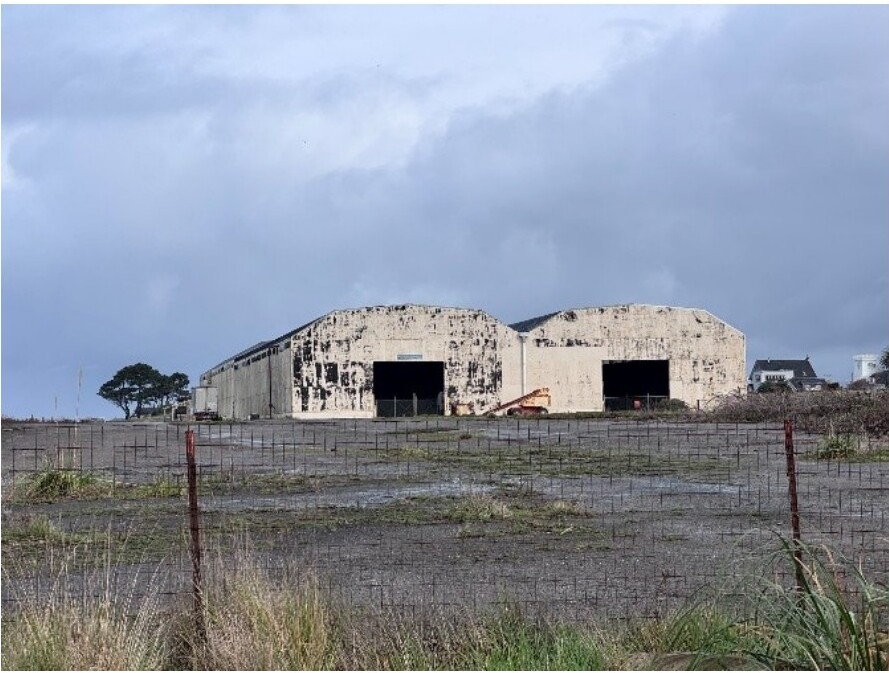
Some places are buildings. This one was practically a city inside the city.
The former Georgia-Pacific mill site is the big, complicated heart of old Fort Bragg. It is not one storefront, one shop, or one address people can point to neatly. It is a huge bluff-top industrial landscape west of Highway 1, extending from near the Noyo River Bridge north toward Glass Beach.
For generations, this was where lumber, railroads, whistles, smoke, machinery, jobs, paychecks, and family histories all ran together.
The former mill site covers roughly 400 acres between the developed part of Fort Bragg and the Pacific Ocean. Its size alone helps explain why the property continues to dominate discussions about the city's history, coastline, economy, and future.
History
The story began long before the Georgia-Pacific name appeared at the entrance.
This was Union Lumber Company country first. The mill was closely tied to the early development of Fort Bragg, the construction of the railroad, the shipment of redwood lumber, and the company-town structure that shaped daily life along the Mendocino Coast.
Union Lumber eventually became part of Boise Cascade, and the mill later operated under Georgia-Pacific. By the time most local people simply called it GP, several generations of Fort Bragg workers had already passed through its gates.
The mill closed in 2002, ending an industrial chapter that had lasted for more than a century and had helped make Fort Bragg one of the major redwood lumber towns on the California coast.
The Working Mill
The size of the operation can be difficult to understand today.
Inside the mill grounds were planing operations, plywood production, a finger-joint plant, dry kilns, lumber yards, loading areas, maintenance shops, electrical facilities, plumbing and sheet-metal shops, railroad buildings, the roundhouse, power facilities, storage areas, truck routes, and miles of connected working space.
The site operated less like a single factory and more like a network of smaller industrial worlds, each with its own crews, machinery, routines, dangers, and specialized knowledge.
Some workers spent their careers learning how to keep old equipment running. Millwrights could recognize trouble from a change in vibration or sound before anyone else noticed a problem. One family remembered a planing-mill millwright whose knowledge was so valuable that after he left, the company needed two workers to replace him.
The finger-joint plant was another important part of the operation. Shorter pieces of lumber could be joined into longer usable products, reducing waste and turning smaller sections of wood into marketable material.
The Dry Kilns
The dry kilns were a major part of lumber production.
Fresh lumber was stacked and dried with steam heat carried from the power plant through insulated pipes. The work involved heat, moisture, machinery, steam, sawdust, and constant movement.
The mill was remembered during some periods as operating 24 hours a day, six days a week. Graveyard shifts were part of normal Fort Bragg life. One crew might be walking out as the rest of town was waking up, while another shift was already heading through the gates.
The Green Chain
The green chain was one of the hardest and best-remembered jobs in the mill.
Fresh-cut boards moved along a conveyor while workers pulled, sorted, graded, and stacked the lumber. They wore heavy gloves and protective aprons, but the work still took a toll on backs, shoulders, arms, and hands.
Many people began their mill careers on the green chain before moving into other departments. The work was repetitive, fast, physical, and demanding.
Women at the Mill
Women worked at the mill too, and their labor deserves to be remembered clearly.
Local families recalled mothers and grandmothers pulling chain, handling lumber, and working demanding shifts alongside the men. Some continued until their bodies could no longer manage the strain.
The mill's history is often told through fathers, grandfathers, husbands, and sons, but women were part of the working mill as well. Their contribution belongs in the story alongside every other crew that kept the operation moving.
Mill Families
For many Fort Bragg families, the mill was not one person's job. It was a family history.
Some families had fathers, mothers, grandparents, husbands, wives, cousins, and several generations tied to the mill, the railroad, logging companies, trucking operations, or the surrounding woods.
One family traced its logging and mill history back five generations, with relatives working in Caspar, Albion, Fort Bragg, and other Mendocino Coast mill towns. Others drove logging trucks for local independent logging outfits and hauled timber from the woods to mills along the coast.
One local family remembered a grandfather who worked at the site for 43 years, beginning under Union Lumber Company and continuing after the operation became Georgia-Pacific.
Trucking and Lumber Products
The mill supported many jobs beyond the workers stationed inside its buildings.
Truck drivers hauled finished lumber away throughout the 1980s and 1990s. Others delivered hog fuel or removed sawdust, bark, chips, and redwood shavings.
Lumber inspectors checked finished products and remembered the mill producing a wide range of good-quality material. Plant supervisors ran departments, crews loaded trucks and railcars, and maintenance workers kept machinery operating.
One driver remembered hauling redwood shavings from the site and seeing deer walking calmly through the mill grounds. Even inside a large industrial operation, the surrounding coast and wildlife were never far away.
The Company Store
Union Lumber Company was more than an employer.
The company operated a store where workers and their families could purchase goods and maintain accounts, with payments sometimes deducted directly from wages.
The company's influence reached into housing, shopping, credit, transportation, railroad service, and everyday family life. For many residents, the lumber company was woven into nearly every part of Fort Bragg's routine.
Visitors who came to Fort Bragg decades ago still remember the mill and the Company Store as major features of the town.
The Railroad
The railroad and the mill belonged to the same working system.
California Western Railroad began as part of the lumber industry, moving logs, lumber, supplies, freight, and people through the rugged coastal mountains.
The tracks, locomotives, roundhouse, railroad shops, and mill facilities were connected parts of one large industrial network. The railroad was not originally a separate tourist attraction. It was part of the machinery that allowed the lumber economy to function.
One former worker joked that lasting six months at the roundhouse was quite an accomplishment. Whether someone worked there for a few months or several decades, the experience tended to stay with them.
The Airstrip and Burners
The old airstrip is another feature people remember from the mill grounds.
The property was large enough to contain mills, warehouses, railroad operations, roads, open ground, storage areas, and its own internal patterns of movement.
People also remember the burners, the glow at night, smoke, drifting particles, and the smell of redwood and sawdust. Those memories are part of the industrial atmosphere that once covered Fort Bragg's west side.
Not every memory is nostalgic. One comment carried a blunt warning not to eat blackberries growing around the old industrial ground.
Environmental Cleanup
The mill provided jobs, supported families, and helped build Fort Bragg, but heavy industry also left environmental problems behind.
Contamination and cleanup have remained major concerns since the mill closed. Decades of fuel use, machinery, wood treatment, industrial waste, rail activity, and manufacturing left parts of the property requiring investigation and remediation.
The history of the site includes both family pride and environmental damage. Both parts matter.
The Mill Closure
When the mill closed in 2002, Fort Bragg lost more than a large employer.
The town lost the whistles, shift changes, machinery, truck traffic, steam, burners, and the steady expectation that the mill would still be running the next morning.
The closure changed the city's economy and left an enormous section of coastal land without a settled purpose.
For some residents, the closing marked the end of the working Fort Bragg they had always known.
Ownership
Mendocino Railway, owner of the Skunk Train, completed its acquisition of the former Georgia-Pacific mill site in November 2021.
Since then, ownership, development authority, environmental cleanup, railroad use, public access, housing, and the future of the property have remained major community issues.
The site is privately owned, but because of its size, location, environmental history, and importance to the city, decisions about the property affect nearly everyone in Fort Bragg.
Ideas for the Future
The size of the site invites large ideas.
People have suggested housing, parks, open space, educational facilities, railroad expansion, restored industrial uses, concert venues, indoor recreation, climbing gyms, coastal trails, golf, disc golf, an airstrip, and other attractions.
One idea imagined a Paul Bunyan-themed indoor climbing center with artificial trees, coffee, shops, and a place where people could gather during the winter.
Others suggested a municipal golf course, a disc golf course, a concert hall, a reopened airstrip, a drag strip, or even a go-cart track.
Not every suggestion is likely to become part of an actual development plan, but the variety of ideas reveals how strongly people see the land as an opportunity.
Public Access and the Coast
The former mill property occupies one of the most important sections of coastline in Fort Bragg.
Public access, coastal trails, open views, habitat protection, bluff preservation, and connections between the city and the ocean have all been central to planning discussions.
Parts of the coastal trail system have already changed the way people experience the old mill lands. Areas that were once closed industrial ground are now places where people walk, bicycle, watch whales, and look out over the Pacific.
The contrast is remarkable. Land once dominated by heavy machinery now includes some of the most accessible coastal scenery in Fort Bragg.
Community Memory
The comments show how deeply the mill remains connected to local families.
People remembered fathers who worked there, husbands who started on the green chain, grandparents who spent decades inside the gates, women who pulled chain, supervisors who ran departments, drivers who hauled lumber and sawdust, and inspectors who checked finished products.
Some remembered the Company Store. Others remembered the roundhouse, the airstrip, the burners, the deer, or the sound of the mill.
Those personal memories help turn a 400-acre industrial property into something understandable. The site was enormous, but its history was lived one shift, one department, and one family at a time.
Why It Matters
The former Georgia-Pacific and Union Lumber Company site was never just "the mill."
It was one of the main reasons Fort Bragg grew where and how it did. It helped create the railroad, supported generations of families, shaped the town's economy, and gave the west side of Fort Bragg its working identity.
Today, it is also one of the largest questions facing the city.
Some people see loss. Some see contamination. Some see open space, housing, jobs, trails, recreation, or development that should have happened years ago.
Some simply miss the whistles.
Whatever eventually happens to the property, this is one of the places where Fort Bragg's working memory is thickest. It is where the town's industrial past, environmental responsibilities, family histories, and future plans all meet on the same bluff.
Sources & Original Research
This article blends verifiable historical records with personal recollections shared by longtime Fort Bragg residents. Much of this information comes from community memory and is not available in any published source.
Sources: Original post text provided by Gee Bee; community discussion and contributor memories; California Coastal Commission staff reports concerning the former Georgia-Pacific mill site; City of Fort Bragg former mill-site planning and reuse information; Mendocino Railway announcement concerning acquisition of the former mill site; regional reporting on mill-site ownership and redevelopment; Visit Fort Bragg historical timeline; Healthy Mendocino material concerning the Georgia-Pacific Mill Site; Save Noyo Headlands research and advocacy materials. Contributors: Rus Jewett, Rick Merlin, Gee Bee, Yvonne Crytzer Brown, Candi Baird, Carol Lane, Kyla Demetrio, Tom Marsh, Frank McGowan, Charlotte Simpson Thurman, Sandra Liljeberg, Mikael Blaisdell, Steven Taylor, Daniel Leo Galli, Miranda Bernal, Kelly Hilliard, Mark Letner, Doug Ely, Rebel Dyna, Christopher Gomes, Eric Hinderberger, Fred VonAlmen, Tim Butterworth, John Woods, Pat Tavelli, Melinda Toney Van Voast, Theresa Timmer, Scott Shaler, Sky Kenton, Gretchen Lantz, David Danger Daz, Larry Chamberlain, Paul Mifsud Jr, Leah David, and Gary Aitken.
