Good Morning Graphics in Fort Bragg, California
    Back to Index
    BusinessPrint & design shopFort Bragg, CA

    Good Morning Graphics

    541 S. Franklin St. — A working South Franklin building that has gone from metalwork and woodshop work to custom guitars, construction, and the printed face of local businesses.

    Last updated: August 2, 2026

    A plain, practical trade building whose history is measured in the things people made inside it.

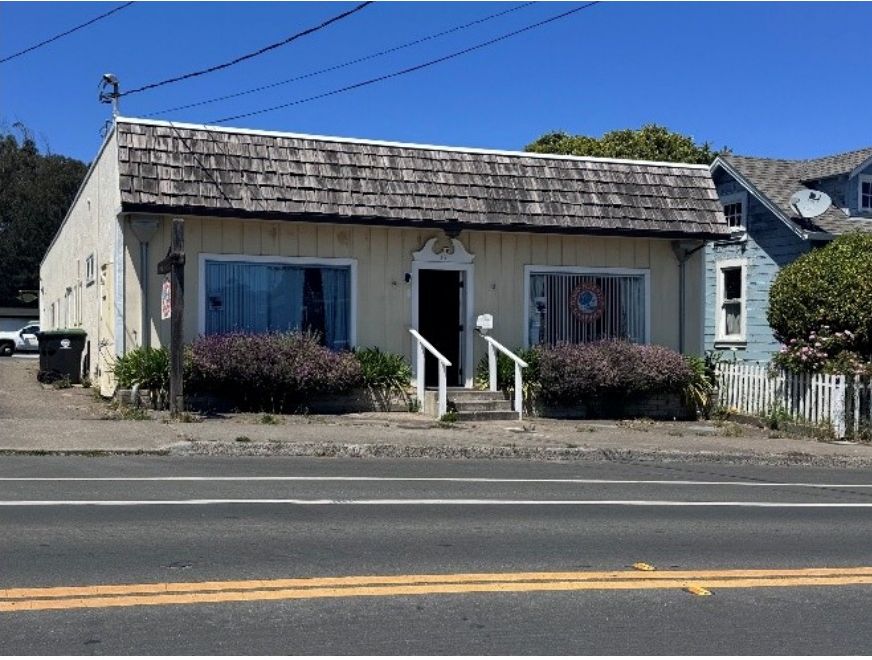
    Good Morning Graphics — archival photograph, Fort Bragg, California

    Overview

    Some buildings show off their history. This one simply keeps working.

    Good Morning Graphics now occupies the practical commercial building at 541 S. Franklin Street, and the present use fits the property well.

    The business helps local companies and organizations present themselves to the public through printing, graphic design, signs, web design, and other communication materials.

    That is the latest chapter in a building whose earlier occupants also made useful things for other people.

    Over the years, community memories have connected the property with sheet-metal work, woodworking, auto-body repair, stove manufacturing, a salon, a bicycle shop, construction, and the handcrafted acoustic guitars of Goodall Guitars.

    The individual businesses changed, but the building kept serving much the same purpose: providing flexible space for skilled people to make, repair, build, design, and produce.

    Location

    Good Morning Graphics is located at 541 S. Franklin Street in Fort Bragg.

    The property stands along a practical commercial and industrial section of Franklin Street, away from the decorative storefronts and heavier pedestrian activity of the downtown shopping district.

    This part of town has long suited businesses that need parking, working space, delivery access, storage, tools, and room for production behind the public-facing portion of the building.

    The location allows customers to reach the storefront easily while giving the businesses inside enough space for the less-visible work that happens behind the counter.

    A commercial property listing describes the building as dating to 1974 and containing nearly 3,900 square feet. Its design reflects the needs of a working trade building rather than a decorative retail storefront.

    The property has parking near the entrance, broad front windows, a long building footprint, and enough interior room to divide public-facing space from production, storage, shop, or office areas.

    It is not one of Fort Bragg's ornate downtown buildings, nor does it resemble the older houses that were later converted into shops. Its importance comes from usefulness.

    The building could accommodate metalworking equipment, woodworking tools, vehicle work, stoves, salon services, guitar construction, graphic production, and construction-related activity because it was adaptable enough to change with each new occupant. That flexibility has helped it remain active for more than fifty years.

    History

    The earliest community memories attached to the present building reach back to the 1970s. The west end is remembered as the sheet-metal shop operated by Clarence and Dora Branesky, while the east end was remembered as Jon's Woodshop.

    Those uses gave the address a distinctly practical beginning. Sheet-metal work required tools, benches, equipment, storage, and room to fabricate pieces for buildings, heating systems, and other local needs. Woodworking required many of the same basic features: shop space, power, ventilation, materials storage, and enough room to shape and assemble projects.

    Together, the two businesses established a pattern that continued through much of the building's history. This was a place where people worked with their hands and made things intended to be used.

    Later memories add several more working chapters to the property. The building is remembered as housing an auto-body shop during the late 1980s. That use would have taken advantage of the building's open working areas, vehicle access, and practical South Franklin location.

    Community comments also remember a woodworking school and Dwyer Stoveworks operating here. Both fit naturally within the building's earlier history. A woodworking school continued the property's relationship with wood, tools, craft, and instruction. Dwyer Stoveworks added another form of skilled production involving metal, fabrication, and equipment designed for everyday use.

    A salon is also remembered in the front portion of the building. That chapter shows how the property could support customer-oriented services near the street while larger shop or production activities continued elsewhere inside. One recollection also mentions a bicycle-shop period, although the name and operating dates of that business still need further documentation.

    These businesses may appear unrelated at first, but they all relied on the same essential qualities: visibility, parking, flexible interior space, and room for real work behind the storefront.

    One of the building's most distinctive chapters came with Goodall Guitars. James and Jean Goodall had been building highly regarded acoustic guitars in Fort Bragg for many years. The company states that its final Fort Bragg shop operated for fifteen years before the business moved to Sparta, Tennessee, in 2024.

    During that period, the modest South Franklin building became a place where finely crafted acoustic guitars were built and sent to musicians far beyond the Mendocino Coast. That is a remarkable piece of Fort Bragg history hidden behind a building that gives little outward indication of what was created inside.

    The Goodall chapter also fits naturally with the property's older woodworking memories. From Jon's Woodshop and later woodworking instruction to the careful selection, shaping, joining, finishing, and tuning required to build an acoustic guitar, the address repeatedly returned to work involving wood, tools, patience, and skilled hands. The products changed, but the tradition of craftsmanship continued.

    The Building Today

    The building at 541 S. Franklin Street continues to look much as its history suggests it should: practical, accessible, adaptable, and ready for work.

    Good Morning Graphics occupies the property today, providing printing, design, signs, web services, and other materials for local businesses and organizations. The Mendocino Coast Chamber of Commerce describes the business as a local printing, web-design, and business-services operation.

    The work is different from sheet metal, woodworking, stoves, auto-body repair, or guitar making, but the underlying pattern remains familiar. Ideas and raw materials come into the building. Skilled work happens inside. A finished product leaves for someone else to use.

    Greenwood Construction is also associated with the address, preserving the property's connection with building trades and hands-on work. Construction work depends on planning, materials, tools, measurements, experience, and the ability to turn an idea into something physical.

    The current businesses bring together two major themes that have followed the property for decades. One is construction and fabrication: sheet metal, auto-body work, stoves, woodworking, guitars, and building projects. The other is design and presentation: the visual work that helps an idea, object, project, or business take recognizable form.

    The building does not need elaborate architecture to express its history. Its value lies in the work that has repeatedly taken place inside.

    Community Memories

    Community recollections give 541 S. Franklin Street a much richer history than its plain exterior might suggest.

    Residents remember Clarence and Dora Branesky's sheet-metal shop in the west end and Jon's Woodshop in the east end.

    Other comments recall an auto-body shop, a woodworking school, Dwyer Stoveworks, a salon in the front portion, a bicycle shop, Goodall Guitars, Greenwood Construction, and Good Morning Graphics.

    One contributor also remembered improvements made during the Goodall period, including work involving the ceiling and insulation. Those details help show that each business not only occupied the building but sometimes altered it to meet new production needs.

    Another comment did not identify an earlier business at all. Instead, it reflected on how these stories help people stay connected to the Fort Bragg they remember.

    That observation matters. A building like this does not need one famous occupant to be historically important. Its story comes from the number of local trades, crafts, services, and working lives that passed through the same doors.

    Timeline

    1974 — A commercial property listing identifies this as the construction year of the nearly 3,900-square-foot building.

    1970s — Community memory places Clarence and Dora Branesky's sheet-metal shop in the west end and Jon's Woodshop in the east end.

    Dates not yet confirmed — A woodworking school, Dwyer Stoveworks, a salon, and possibly a bicycle shop operated in the building.

    Late 1980s — The property is remembered as housing an auto-body shop.

    Approximately 2009–2024 — Goodall Guitars operated its final Fort Bragg workshop in the building for fifteen years before relocating to Sparta, Tennessee.

    2024 — Goodall Guitars announced that it had moved from Fort Bragg to Tennessee.

    Recent years — Greenwood Construction became associated with the address.

    Today — Good Morning Graphics occupies the building, providing printing, design, web, signage, and business services.

    Why It Matters

    The building at 541 S. Franklin Street is the kind of place that rarely gets called historic while it is busy doing its job.

    It is not ornate. It does not dominate the street. It was not built as a grand hotel, bank, theater, or civic landmark. Its importance comes from work.

    Sheet metal was shaped here. Wood was cut and assembled. Vehicles were repaired. Stoves were produced. People learned woodworking skills. Customers visited a salon. Guitars were carefully handcrafted. Construction work was organized. Signs, printed materials, websites, and business images were created.

    Those uses form a surprisingly creative history for such a modest building. They also reflect an important part of Fort Bragg that can be missed when local history focuses only on prominent storefronts and older landmarks.

    The town has always depended on practical buildings where people could repair, fabricate, teach, construct, print, design, and make things for one another.

    541 S. Franklin Street is one of those buildings. Its occupants have changed repeatedly, but the work has never really stopped.

    Sources & Original Research

    This article blends verifiable historical records with personal recollections shared by longtime Fort Bragg residents. Much of this information comes from community memory and is not available in any published source.

    Original research post and discussion: https://www.facebook.com/media/set/?set=a.10153269104881177&type=3

    Sources: Original post text and photograph provided by Gee Bee; comment thread provided by Gee Bee with contributor memories from Joe Wagner, Rus Jewett, Anna Roeth, Jayne Rodgers, and Phyllis Weeks; Mendocino Coast Chamber of Commerce listing for Good Morning Graphics; Goodall Guitars official website, including "Goodall Guitars Has Moved!" and company-history pages; Acoustic Guitar Magazine, "California Dreams," provided through Goodall Guitars; LoopNet and MLS commercial listing for 541 South Franklin Street; and California Secretary of State business-record information for Greenwood Construction, Inc. Research still needed: The complete operating dates of Clarence and Dora Branesky's sheet-metal shop and Jon's Woodshop; the names and dates of the remembered auto-body shop, woodworking school, salon, and bicycle shop; the operating period of Dwyer Stoveworks at this address; and confirmation of when Good Morning Graphics and Greenwood Construction first became associated with the property.