Highway 20 Feed
31800 Highway 20 — A working feed store on the road out of town that has been caring for Fort Bragg's animals, ranch families, and pet owners for generations.
Last updated: July 22, 2026
Overview
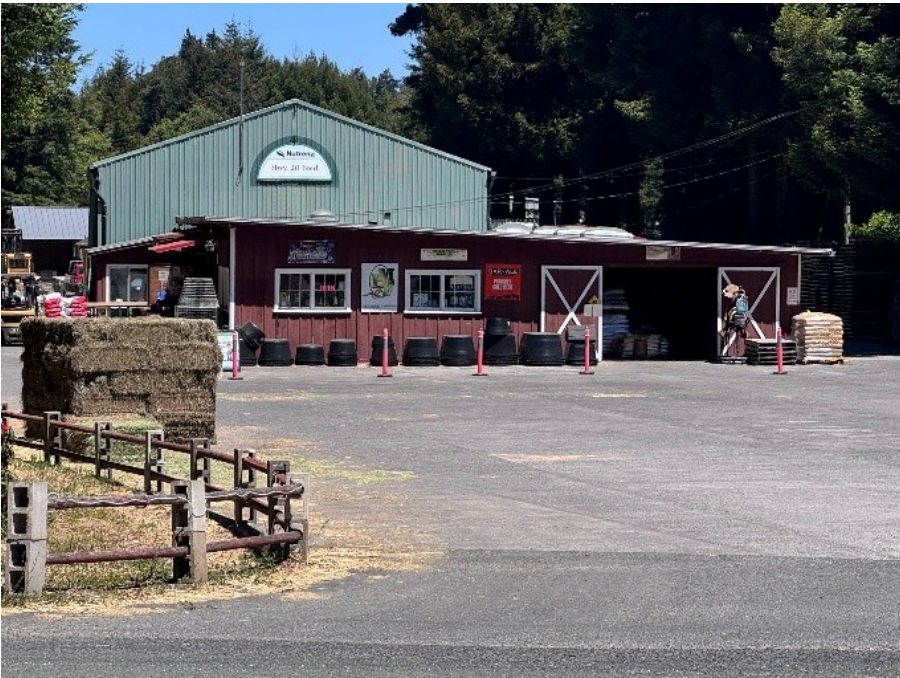
Some landmarks do not need neon signs, ornate architecture, or a downtown storefront.
They become landmarks because people have been turning into the same driveway for years whenever the horses need feed, the chickens need supplies, the dog needs a special bag of food, or someone needs practical advice from people who understand animals.
Highway 20 Feed is one of those places.
Located at 31800 Highway 20, east of Fort Bragg, the business serves a rural coastal community where animals are part of everyday life. Its customers include pet owners, horse families, small ranchers, chicken keepers, 4-H participants, gardeners, and people caring for a wide range of domestic animals and livestock.
The building and property are practical rather than decorative. There is room for feed deliveries, customer vehicles, stacked bags, animal supplies, and the steady movement that comes with a working feed store.
History
Community memory places Highway 20 Feed at this location for more than 50 years.
That kind of longevity puts it into a special category of local businesses — places that seem to have always been there, even though ownership, products, employees, and the surrounding road have changed over time.
A feed store usually becomes established because it fills a basic need. Animals must be fed every day, not only when shopping is convenient. Hay, grain, poultry feed, pet food, minerals, supplements, bedding, and equipment are recurring necessities.
For generations of Fort Bragg-area customers, Highway 20 Feed became the dependable place to find those supplies without traveling inland or ordering everything from a distant company.
The Highway 20 Location
The location east of town is well suited to a feed business.
Highway 20 connects Fort Bragg with rural homes, ranch properties, horse facilities, farms, and inland communities. Customers can pull in with pickups, trailers, or larger vehicles more easily than they could at a narrow downtown storefront.
The site also allows room for deliveries and bulk products.
Feed arrives in heavy sacks and large quantities. Hay, bedding, fencing materials, animal equipment, and other farm supplies require storage space and practical access.
The business fits the road and the road fits the business.
The Building
Highway 20 Feed does not need to pretend to be anything other than a working supply store.
Its value comes from function.
The property provides space for inventory, loading, customer service, vehicle access, and the constant movement of products that may be heavy, dusty, bulky, or difficult to handle.
A feed store building must work differently from an ordinary retail shop. Customers may need help loading several bags into a truck. Deliveries may arrive on pallets. Products must be kept dry, organized, and protected from rodents and weather.
The building is part store, part warehouse, and part working yard.
More Than a Pet Store
The Mendocino Coast Chamber of Commerce has listed Highway 20 Feed under animal services, shopping, and specialty retail.
That combination reflects the business well.
It carries products for household pets, but it is more than a pet store. Its customer base reaches across the different kinds of animals found around Fort Bragg and the Mendocino Coast.
Dogs and cats are part of the picture, but so are horses, chickens, rabbits, goats, livestock, and other animals kept on rural properties.
A customer may come in for premium dog food while the next person needs poultry feed, horse supplements, bedding, or supplies for a child's 4-H animal.
That broad range has helped make the store useful to many different parts of the community.
Feed and Nutrition
Choosing animal feed can be more complicated than simply buying the least expensive bag.
Different animals require different combinations of protein, fiber, vitamins, minerals, and calories. Age, health, workload, breed, weather, and living conditions can all affect what an animal needs.
A working horse may require something different from an older pasture horse. Chicks need different feed from laying hens. A dog with allergies or digestive problems may need a specialized formula.
That is where local knowledge becomes valuable.
Customers often rely on feed-store employees to explain differences between products, suggest appropriate options, and help locate supplies that may not be commonly stocked elsewhere.
Practical Advice
The comments remembered Highway 20 Feed for its service and friendly, family atmosphere.
That may be one of the biggest reasons a feed store survives for decades.
People may enter because they need a product, but they return because they trust the people behind the counter.
A good feed-store employee may remember which food a customer buys, ask how an animal is doing, help compare ingredients, or suggest another product when something is unavailable.
That kind of service cannot always be replaced by ordering online.
For customers dealing with a sick animal, a picky eater, a new flock of chickens, or an unfamiliar livestock project, practical advice can be as important as the merchandise itself.
Horse and Livestock Families
Highway 20 Feed serves an area with a strong connection to horses and small-scale livestock.
The Mendocino Coast may be known for fishing, timber, and tourism, but rural life begins quickly outside Fort Bragg's city limits.
Families keep horses, goats, chickens, rabbits, and other animals on properties throughout the surrounding area. Those animals require regular feed, bedding, health products, fencing supplies, and equipment.
A local feed store helps make that lifestyle possible.
Without one, customers may have to travel long distances for basic supplies, especially when they need something quickly.
Pet Owners
Pet owners form another important part of the business.
Dogs and cats are central to many Fort Bragg households, and feeding them can involve more than picking up a standard grocery-store product.
Some animals need special diets because of age, allergies, weight, activity level, or medical concerns. Others may simply do better on a particular formula.
Highway 20 Feed gives customers access to a wider range of foods and animal-care products while allowing them to speak directly with someone familiar with the merchandise.
That personal assistance is especially valuable when a customer is trying to solve a recurring problem or change an animal's diet.
Chickens and Backyard Animals
Backyard chickens have long been part of rural and small-town life around Fort Bragg.
Families keep them for eggs, enjoyment, 4-H projects, and the practical satisfaction of raising part of their own food.
Chicken keeping requires more than feed. People need feeders, waterers, bedding, grit, supplements, health products, and sometimes advice about pests, weather, or egg production.
Feed stores become natural gathering points for that kind of knowledge.
The same is true for rabbits, goats, and other small animals that may be kept as pets, livestock, or youth projects.
4-H Support
Highway 20 Feed has also been connected with support for local 4-H activities.
That relationship fits naturally with the store's role.
4-H gives young people hands-on experience raising animals, learning responsibility, keeping records, preparing for shows, and understanding the daily work involved in animal care.
Those projects require feed, supplies, equipment, and regular support from families and local businesses.
A feed store that supports 4-H is helping more than individual customers. It is supporting the next generation of people learning agriculture, animal care, and practical responsibility.
Vaccination Clinics
Highway 20 Feed has also been mentioned locally in connection with animal vaccination clinics.
Those clinics provide a valuable service in a rural coastal area.
Veterinary care can be expensive, appointments may be limited, and animal owners sometimes need convenient access to routine vaccinations and preventive services.
Holding or supporting clinics at a familiar feed store brings basic animal care closer to the people who need it.
It also reflects the store's broader role as part of the local animal-care network rather than simply a place where products are sold.
Family Atmosphere
One community memory described Highway 20 Feed as having great service and a friendly, family atmosphere.
That description captures the difference between a longtime local feed store and a large anonymous retailer.
Customers may know the employees, and employees may recognize the customers, their families, and sometimes their animals.
A person may stop in frequently enough that the conversation continues from one visit to the next.
That familiarity creates loyalty, but it also creates responsibility. People expect the store to carry dependable products, give honest advice, and understand the conditions in which local animals are being raised.
The Coastal Climate
Animal care on the Mendocino Coast comes with its own challenges.
The climate is cool, damp, windy, and often muddy. Feed and bedding must be stored carefully. Animals may need shelter from prolonged rain, and equipment must withstand moisture and coastal weather.
Horses and livestock living near the coast face conditions different from animals raised in hotter or drier areas.
A local feed store understands those realities because its customers deal with them every season.
Products that work well elsewhere may not always be the best choice here. Local experience helps customers choose supplies suited to the actual environment.
A Working Landmark
Highway 20 Feed may not look like the kind of place that usually appears in a history book.
It is not a grand civic building or a restored downtown landmark.
Its importance comes from repetition.
For decades, people have turned off Highway 20, walked through the doors, bought what their animals needed, loaded it into a vehicle, and gone home to complete the next feeding or chore.
That routine has been repeated thousands of times by generations of customers.
The business became a landmark because it remained useful.
Community Memory
The memories connected with Highway 20 Feed are simple but meaningful.
People remember how long it has been there. They remember good service, helpful employees, and the feeling of a family-run local business.
Those may sound like ordinary details, but they explain why customers become attached to places like this.
A feed store enters people's lives through daily responsibility. Animals cannot wait until next week to be fed. A horse, dog, cat, chicken, or 4-H project depends on someone making that trip and bringing home what is needed.
Over time, the store becomes part of the rhythm of caring for them.
Why It Matters
Highway 20 Feed belongs in Fort Bragg history because it represents the practical side of community life.
It has served the people caring for household pets, horses, chickens, livestock, and youth animal projects for generations.
It has supplied food and equipment, offered advice, supported 4-H, and helped connect local animal owners with vaccination services and other resources.
The business is not important because of elaborate architecture or a dramatic event.
It matters because people have depended on it.
For more than half a century, Highway 20 Feed has been the stop on the road out of town where customers could find a needed bag of feed, ask a question, load the truck, and head home knowing the animals would be taken care of.
Sources & Original Research
This article blends verifiable historical records with personal recollections shared by longtime Fort Bragg residents. Much of this information comes from community memory and is not available in any published source.
Sources: Original post text supplied by Gee Bee; community discussion and contributor memories; Mendocino Coast Chamber of Commerce business-directory listing for Highway 20 Feed; Highway 20 Feed business contact information and social-media page; Anderson Valley Advertiser and Mendocino County Today, December 19, 2024. Contributors: Evelyn Bishop Anderson and Cindy Green.
