Mendocino Coast Botanical Gardens
18220 N. Highway 1, Fort Bragg, CA 95437 — Founded by Ernest and Betty Schoefer in 1961, the Mendocino Coast Botanical Gardens have become a 47-acre coastal landmark where cultivated gardens, native forest, walking trails, and ocean bluffs come together along the Pacific.
Last updated: October 20, 2026
Overview
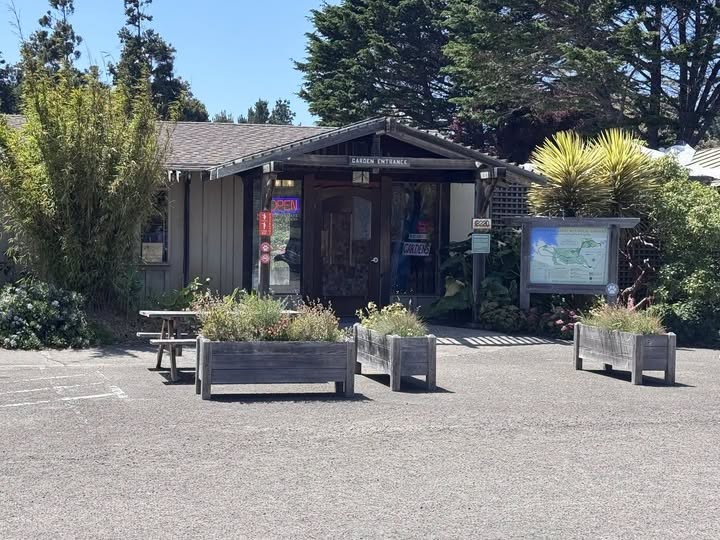
Mendocino Coast Botanical Gardens, located at 18220 N. Highway 1 just south of Fort Bragg, is one of the Mendocino Coast's most distinctive attractions.
From a modest highway entrance, visitors enter a landscape of ornamental gardens, woodland trails, coastal vegetation, and oceanfront bluffs.
The Gardens are especially known for their rhododendrons, dahlias, camellias, heathers, roses, conifers, succulents, and native plants.
Opened to the public in 1966, the property has developed into a center for horticulture, conservation, education, recreation, and community events.
Location
18220 N. Highway 1 lies just south of Fort Bragg on the west side of the coast highway.
The entrance building, parking area, nursery, and garden store occupy the eastern portion of the property. More than four miles of trails wind through cultivated gardens, woodland, and native coastal vegetation before reaching the Pacific Ocean.
Benches, lawns, and quiet resting places allow visitors to explore at their own pace.
History
The Schoefer Years
Mendocino Coast Botanical Gardens was founded in 1961 by retired nurseryman Ernest Schoefer and his wife, Betty.
Ernest recognized the property's favorable growing conditions, including dependable water, rich soil, cool summers, mild winters, and the moist maritime climate needed by rhododendrons and other acid-loving plants.
The couple developed pathways and plant collections while incorporating the natural forest and coastline into their vision of a botanical garden.
The Gardens officially opened to the public in 1966.
Preservation and Public Ownership
Following the Schoefers' years of operation, the property passed through private ownership.
In 1992, grants from the California Coastal Conservancy helped purchase the land and transfer ownership to the Mendocino Coast Recreation and Park District, protecting it for public use.
A nonprofit organization operates the Gardens, maintaining the collections, educational programs, conservation activities, and visitor facilities.
The property is also part of the ancestral homeland of the Northern Pomo people, whose connection to the Mendocino Coast predates the establishment of the Gardens.
Employees, Volunteers, and Community Support
Generations of employees, volunteers, and supporters have contributed to the property's development.
Maintaining the grounds requires continuous planting, pruning, trail maintenance, invasive plant control, nursery operations, and care of the botanical collections.
Volunteers assist with gardening, educational programs, plant sales, and special events. The Gardens have also provided opportunities for approved community-service work.
Gardens, Forest, and Coastal Trails
The Mendocino Coast's mild maritime climate supports a remarkable variety of ornamental and native plants.
Rhododendrons are particularly popular during winter and spring, while camellias, magnolias, heathers, and azaleas provide additional seasonal color.
Roses, begonias, fuchsias, and dahlias flourish during the warmer months. Other collections include conifers, succulents, Mediterranean plants, and California native species.
Walking trails lead through woodland and coastal vegetation to the ocean bluffs, where visitors experience the transition from cultivated gardens to the natural coastline.
Events and Education
The Gardens have hosted concerts, workshops, plant sales, educational programs, and community celebrations for decades.
The Music in the Gardens concert tradition began in 1983, becoming a familiar part of local summer entertainment.
Art in the Gardens combines artwork, music, food, and horticulture, while the Festival of Lights brings holiday displays to the property.
School field trips, guided tours, and educational programs introduce visitors to gardening, conservation, and the coastal environment.
The nursery offers plants suited to local growing conditions.
Access and Affordability
Admission fees, memberships, donations, plant sales, and special events help support maintenance and educational activities.
The Gardens participate in the Museums for All program, offering reduced admission and membership opportunities for qualifying individuals and families.
A $10 annual membership option has been offered to eligible participants, making regular visits more affordable. Current program details and pricing should be confirmed with the Gardens.
Community Memories
For many Fort Bragg residents, the Botanical Gardens have been part of family life for generations.
Some remember visiting shortly after the Gardens opened, while others recall school field trips, childhood outings, and outdoor concerts during the 1980s.
One former employee remembered collecting admission fees outside during that decade, before the present entrance building was used.
Another recalled working for Betty Schoefer while Ernest was developing the property, describing the couple fondly and remembering the work involved in creating the Gardens.
Residents frequently brought visiting relatives and friends, particularly those who had never experienced the property.
Others remembered annual visits, walking their dogs, attending rhododendron shows, and enjoying the seasonal displays, especially the dahlias and roses.
The hammocks along the trails became favorite resting places, while the walk through forest to the ocean bluffs left a lasting impression.
One former resident described the Gardens as a place of peace, beauty, and tranquility that was deeply missed after moving away.
Several visitors initially hesitated over admission costs but later considered the experience worthwhile. Others appreciated membership opportunities and the dedication of employees and volunteers.
Families also remembered enjoying lunch, shopping for plants and gifts, and attending holiday celebrations.
These recollections reflect the Gardens' place in local traditions, from family outings and concerts to quiet afternoons among flowers and trees.
Why It Matters
Mendocino Coast Botanical Gardens represents more than six decades of horticultural development, community involvement, and coastal conservation.
What began as the Schoefers' private garden enterprise became a public destination that preserves an important stretch of coastal landscape while providing opportunities for education, recreation, and appreciation of the natural environment.
Generations of employees, volunteers, members, and visitors have contributed to its continued success.
For longtime residents, the Gardens hold memories of childhood field trips, concerts, family outings, and peaceful walks.
The modest entrance along Highway 1 gives little indication of the landscape beyond it, where decades of work have created one of the Mendocino Coast's most treasured living landmarks.
Timeline
No separate timeline is documented in the existing text.
Sources & Original Research
This article blends verifiable historical records with personal recollections shared by longtime Fort Bragg residents. Much of this information comes from community memory and is not available in any published source.
Mendocino Coast Botanical Gardens official history, plant collections, educational programs, events, visitor information, and membership information, as identified in the earlier website article.
Original Buildings and Businesses in Fort Bragg, California — with History posts and community discussions.
Community recollections: Diane Sherman, Jeni Lee Smith, Lisa D. Walker, Summer Deitz, Anna Roeth, Sharon Ritter Dollins, Patty Reed Barrow, Jeanie Riggs, Todd Hann, Lori Lee, Julie Sherman, Beverly Freitas, James Evan Snidow, Elaine Bauer, Mendocino Coast Botanical Gardens, India Gingell, Sarah Quentin, Ravin Bovavin, Linda Stanton, Katherine Ritchey, John Maurer, Irene Rocha Felix, Susan Wilson, Richard Kemppe, Sarah Brunie, Darlene Stephenson, Michelle Larson-Speir, Benay Nielson, and Vicki McDonnell Russell.
Earlier InFortBragg.com article, July 25, 2026.
Original post and comments: Gee Bee's Adventures
Website archive: www.infortbragg.com
