Sportsman's Park Gallery
32094 N. Harbor Dr. — A small Noyo building with remembered roots in the old cannery era, now home to local nautical art and coastal work.
Last updated: September 6, 2026
Overview
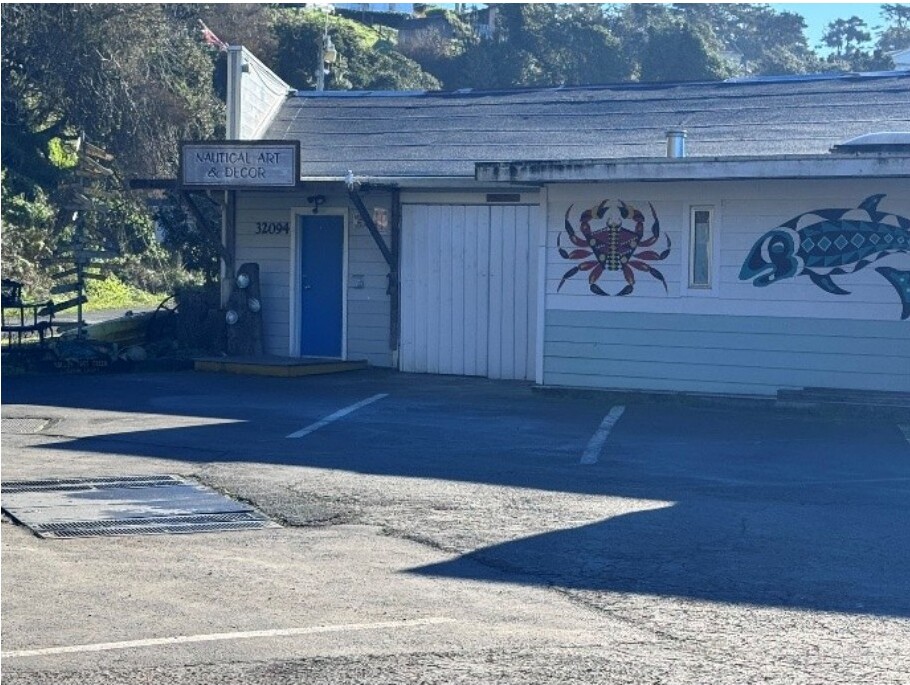
Sportsman's Park Gallery occupies a small building at 32094 N. Harbor Drive with a history that reaches back beyond its present life as an art space.
Today, the building is associated with nautical art, local makers, carvings, and other coastal work.
Community memories point to an older chapter tied to the cannery years and to a larger structure that was later divided into separate business spaces.
Location
The gallery sits at 32094 N. Harbor Drive in Noyo Harbor.
Its small scale and practical construction fit the older commercial buildings that developed around fishing and waterfront work.
History
The earliest history gathered so far comes mainly from community recollection.
People remember this property as part of an older cannery building, with salmon processing or canning associated with the site.
Those memories suggest the present gallery space may once have been part of a larger working structure that was later divided into smaller business spaces.
The exact date of that change, the original extent of the cannery operation, and the sequence of later occupants remain an open part of the story.
Over time, the property shifted into smaller commercial and artistic uses.
The building later became associated with nautical art and décor, including locally made fish and coastal artwork. Community recollections specifically remember wooden fish sculptures by Mitch White.
The Building Today
Today, Sportsman's Park Gallery continues that artistic chapter with work by local artists and makers, much of it reflecting fish, boats, marine life, and the coast.
Why It Matters
32094 N. Harbor Drive shows how an older practical building can take on a completely different use while still reflecting its surroundings.
Its remembered cannery chapter speaks to Noyo's industrial past, while the gallery represents a later tradition of local art and craftsmanship.
Community Memories
Local recollections preserve the parts of the story that remain least documented: the old cannery connection, the larger structure being divided, and the transition into gallery use.
Those memories help fill gaps in a chronology that is still incomplete.
Timeline
Earlier Years — Community memory associates the property with an older cannery building and salmon-processing activity.
Later Transition — The larger structure is remembered as being divided into smaller business spaces. The date and exact sequence remain uncertain.
Gallery Era — The property becomes associated with nautical art, local makers, and coastal artwork.
Present — Sportsman's Park Gallery occupies 32094 N. Harbor Drive.
Sources & Original Research
This article blends verifiable historical records with personal recollections shared by longtime Fort Bragg residents. Much of this information comes from community memory and is not available in any published source.
This history combines Gee Bee's original Buildings and Businesses research and photograph with community recollections concerning the property's remembered cannery-era history, later subdivision, and gallery use.
The cannery connection and details about the larger building being divided come primarily from community memory. Exact dates, the original extent of the cannery operation, and the sequence of later occupants remain continuing areas of research.
Sources: Gee Bee original photograph, original post, Buildings and Businesses research, and community material; community recollections concerning the old cannery building, salmon-processing activity, subdivision of the larger structure, gallery use, and locally made coastal artwork, including memories of Mitch White's wooden fish sculptures.
