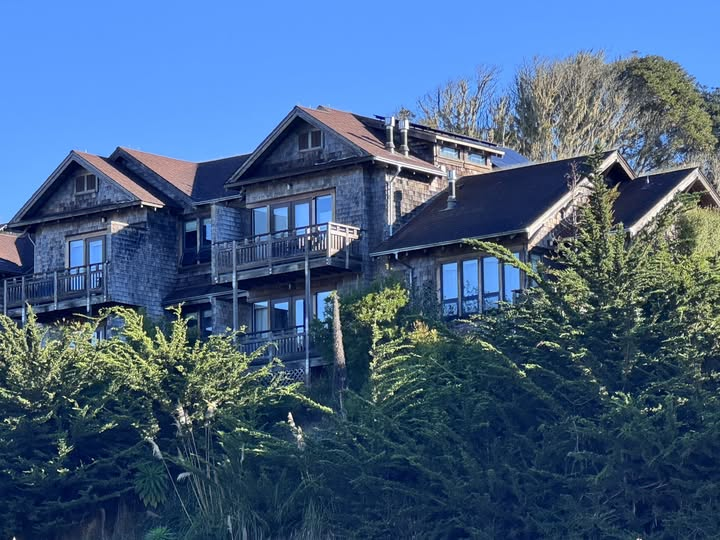
Noyo Harbor Inn
500 Casa Del Noyo Drive — A blufftop landmark above the Noyo River whose history reaches from the lumber era through family ownership, Coast Guard housing, Casa Del Noyo, treatment-center years, the Noyo River Lodge, and today's restored historic inn.
Last updated: September 7, 2026
Overview
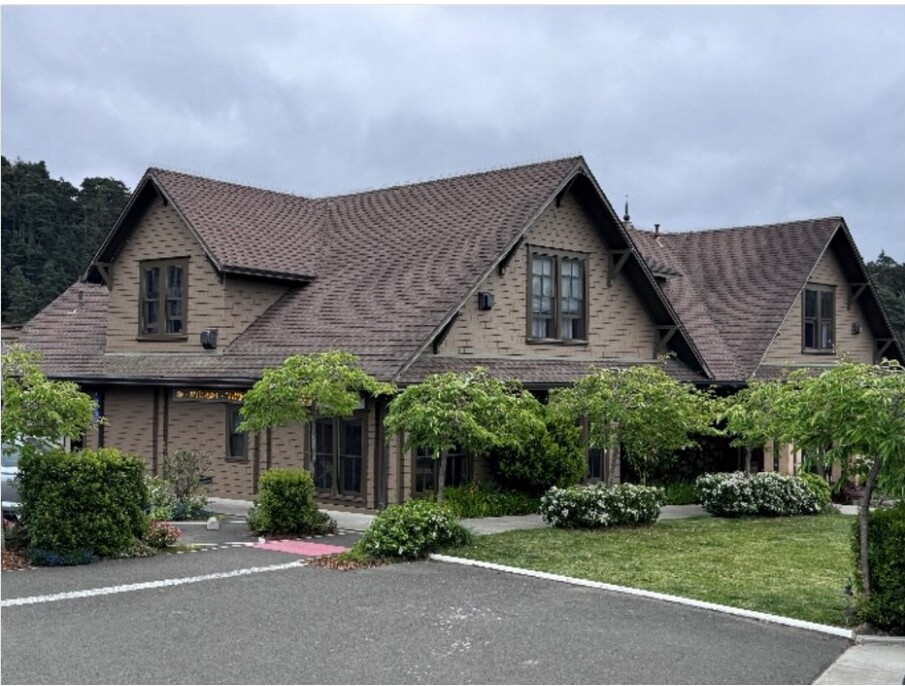
The Noyo Harbor Inn is one of Fort Bragg's most distinctive historic properties.
Perched above the Noyo River at the end of Casa Del Noyo Drive, the property has been adapted repeatedly for more than a century. It has served as a family residence, wartime housing, lodge, gathering place, treatment center, restaurant, bar, and inn.
Today it operates as the Noyo Harbor Inn, with lodging, dining, event space, and wide views across the river and working harbor.
The building survived not by remaining unchanged, but by finding new uses while retaining much of its older character.
Location
The Noyo Harbor Inn stands at 500 Casa Del Noyo Drive on the bluff above the Noyo River and Noyo Harbor.
Its elevated setting gives the property views across the harbor, marina, river, bridges, and surrounding hillsides.
The location has always been central to its identity. In the lumber era, it overlooked an industrial waterfront shaped by mills, timber, shipping, and transportation. Today it overlooks a harbor known for commercial fishing, recreation, restaurants, lodging, and visitor activity.
History
The property's documented history reaches back to the 1860s, when lumberman Alexander Wentworth MacPherson built a house on the bluff overlooking the Noyo River near his lumber operations.
In September 1910, Union Lumber Company sold the house and surrounding property to Harry and Annie Holmes.
The Holmes family enlarged and remodeled the property, particularly between about 1912 and 1920. Historical material associated with the inn states that Norwegian shipbuilders used local hardwoods in portions of the interior and architectural detailing.
The property became closely associated with the Holmes family and is still remembered locally as the former Holmes residence.
During the 1940s, the property was sold to Louis and Alma Schlote.
During World War II, the remodeled lower level was used to house members of the United States Coast Guard stationed around Noyo Harbor.
After the war, the property became known as Casa Del Noyo.
During this period it developed into a lodge and gathering place where weddings, birthdays, family reunions, and other social events were held. Community recollections also remember family members working there as teenagers, cleaning rooms and serving continental breakfast.
One local recollection places the Schlote family's ownership into the 1950s and early 1960s.
The name Casa Del Noyo remains preserved in Casa Del Noyo Drive.
During later years, the property went through a series of owners and uses.
Community memory recalls that during the 1970s it operated for a time as a drug and alcohol treatment facility known as Awareness House.
The complex also served at various times as a private residence, bed and breakfast, restaurant, bar, and lodge.
By the early 1990s, the property was operating as the Noyo River Lodge. One community recollection remembers a family member managing the lodge for a number of years.
The Noyo River Lodge later closed, leaving the property facing another period of transition.
In 2011, Joseph Marino purchased the property, renamed it the Noyo Harbor Inn, and began an extensive restoration and redevelopment.
The work continued for several years as the historic complex was updated for modern lodging, dining, and hospitality use while retaining the character of the older buildings.
The Noyo Harbor Inn reopened in 2017.
Today
The Noyo Harbor Inn now operates as a lodging, dining, bar, and special-event destination.
The restored property combines modern hospitality with the irregular shape and layered appearance created by generations of expansion and remodeling.
Community memories describe the inn as a favorite place for special dinners, visiting guests, happy hour, and harbor views.
For some local families, the property also carries personal history connected to Casa Del Noyo and the Noyo River Lodge.
People remember cleaning rooms, serving breakfast, attending birthday parties and family reunions, managing the lodge, and later returning for dinner or special occasions.
Architectural Character
The Noyo Harbor Inn reflects its long history through its architecture.
Cedar shingles, gabled rooflines, porches, decks, railings, windows, and connected additions give the property the appearance of a complex built in stages.
That appearance reflects its actual development.
The original residence was enlarged by later owners, remodeled for new purposes, adapted for lodging and public spaces, and eventually restored as a modern inn.
Rather than appearing perfectly uniform, the building records the changing needs of the families and businesses that occupied it.
Community Memories
Community recollections add details that do not always appear in published histories.
Memories include the property's years as Casa Del Noyo, teenage work cleaning rooms and serving breakfast, birthday parties, family reunions, ownership during the 1950s and early 1960s, its period as Awareness House in the 1970s, and management of the Noyo River Lodge.
Other recollections describe the modern inn as a favorite destination for dinner, happy hour, visiting guests, and special occasions.
There are also memories of changing pedestrian access around Casa Del Noyo Drive and past No Trespassing signage near the property.
These recollections are valuable parts of the local story, but where dates or ownership details have not been independently documented, they remain community memory rather than confirmed historical record.
Timeline
1860s – Alexander Wentworth MacPherson is associated with construction of the early blufftop residence near his Noyo River lumber operations.
September 1910 – Union Lumber Company sells the property to Harry and Annie Holmes.
1912–1920 – The Holmes family undertakes substantial remodeling and expansion.
1940s – The property is sold to Louis and Alma Schlote.
World War II – Lower-level space is used to house Coast Guard personnel stationed around Noyo Harbor.
Postwar years – The property becomes known as Casa Del Noyo and develops as a lodge and gathering place.
1950s–early 1960s – Community recollection places Schlote family ownership into this period.
1970s – Community memory recalls use of the property as Awareness House, a drug and alcohol treatment facility.
Early 1990s – The property operates as the Noyo River Lodge.
2011 – Joseph Marino purchases the property and begins restoration.
2017 – The restored property reopens as the Noyo Harbor Inn.
Present – The property operates as a historic inn, restaurant, bar, and event destination.
Why It Matters
The Noyo Harbor Inn brings together several major parts of Fort Bragg and Noyo Harbor history.
Its story touches the early lumber industry, the Holmes family, World War II Coast Guard activity, Casa Del Noyo, local family gatherings, treatment-center years, the Noyo River Lodge, and the modern hospitality industry.
It is also a good example of how historic buildings survive through adaptation.
The property has changed names, owners, and purposes many times, but its blufftop setting and layered architectural character continue to connect the present-day inn with the older Noyo Harbor landscape.
Sources & Original Research
This article blends verifiable historical records with personal recollections shared by longtime Fort Bragg residents. Much of this information comes from community memory and is not available in any published source.
This history combines documented property and business history with original research and community recollections gathered through the Buildings and Businesses with History project.
Published and institutional material was used where available, while personal recollections were treated as community memory unless independently confirmed.
Sources: Original photograph, post text, research, and follow-up material by Gee Bee; Noyo Harbor Inn historical materials and property history sheet concerning the MacPherson, Holmes, Schlote, Casa Del Noyo, and restoration periods; Noyo Harbor Inn and HarborView Bistro & Bar business materials concerning the present-day property; InFortBragg.com Noyo Harbor Inn research and compiled history; Mendocino County visitor and lodging materials; community recollections from Clancey Kennedy, Julia Seaholm, Tania Sousa, Judy Thompson, Glenn Mason, Brandon Palmer, Linda Stanton, Anna Roeth, RJ Dial, and Gee Bee.
The earlier ownership transitions, exact dates of some intermediate uses, and portions of the Awareness House and Noyo River Lodge timeline remain open parts of the story.
