Colombi Market and Deli
From Mama Colombi and Celeste to childhood candy runs, family charge accounts and the neighboring Colombi Motel, this East Oak Street market was much more than a corner grocery store. Even with a new name, generations of Fort Bragg residents still remember it as Colombi's.
Last updated: September 26, 2026
Overview
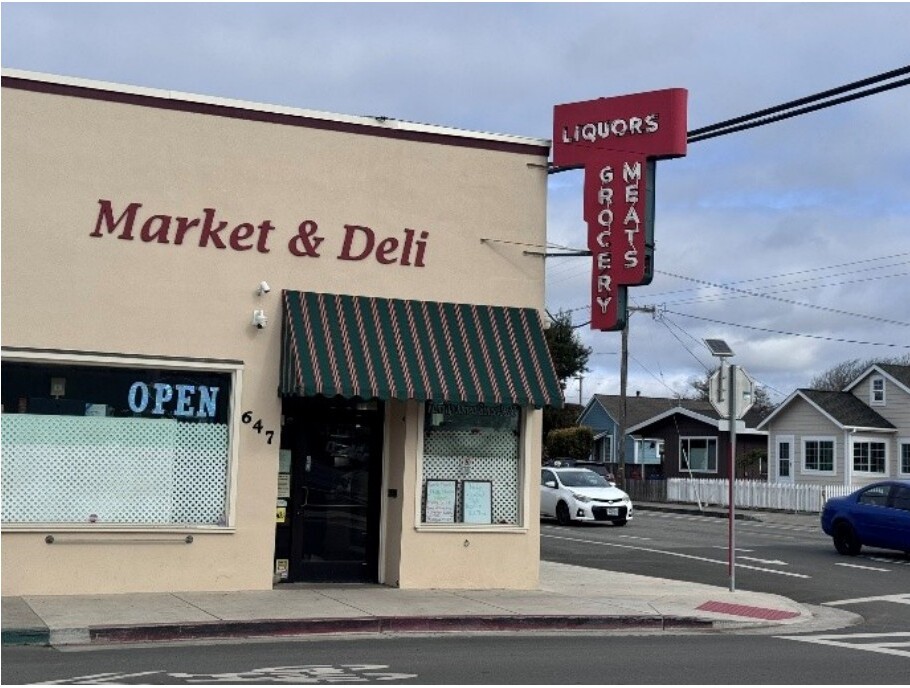
Colombi Market and Deli at 647 E. Oak Street was a neighborhood institution where generations of Fort Bragg residents shopped, worked and grew up.
Known today as Oak Market & Deli, the store remains closely associated with the Colombi family, particularly Mama Colombi, Celeste and the familiar faces who welcomed customers over the years.
The old market offered groceries, meats, deli foods, candy and everyday necessities. Its crowded shelves, colorful displays and personal service made it a gathering place for the surrounding neighborhood.
The family's nearby motel, rental houses and other properties extended the Colombi name well beyond the grocery business.
Location
The market stands at 647 E. Oak Street, east of downtown Fort Bragg.
Its neighborhood location made it convenient for families living along Oak, Maple, Harold and surrounding streets. Children walked or rode bicycles to the store for candy, groceries and family errands.
The neighboring Colombi Motel provided accommodations for travelers and visiting relatives, while nearby rental properties housed local families.
History
Colombi Market was an established neighborhood grocery by at least the 1950s and 1960s, according to longtime residents.
The family-operated store carried groceries, meats, deli foods, candy and an assortment of everyday necessities. Customers remember crowded aisles, colorful merchandise and a counter surrounded by the kind of clutter that made the old market distinctive.
Mama Colombi was a familiar presence, keeping a watchful eye on children wandering through the aisles. Celeste became equally memorable for her kindness, humor and ability to remember customers and their childhood adventures decades later.
The store maintained charge accounts for neighborhood families. Children could ride their bicycles over, collect groceries for their parents and have the purchases added to the family account.
The Colombi family also operated the neighboring Colombi Motel. Former guests remember small but clean and comfortable rooms, individual garages and welcoming owners. The family owned rental houses and other nearby properties, providing housing for local residents.
Former employees describe the market as a close-knit workplace where friendships with the Colombi family often lasted long after their employment ended.
One unusual detail remembered from the old store was its concrete floor, which contained hoofprints and pawprints. Their origins remain uncertain, but they became part of the building's character.
Over time, Colombi Market became Oak Market & Deli. Although the name changed, the corner remains Colombi's in the memories of many longtime residents.
Community Memories
For generations of neighborhood children, Colombi's was a regular destination for candy, snacks and family errands.
Residents remember Mama Colombi following youngsters through the aisles to make sure nothing disappeared into their pockets. Others recall riding bicycles from nearby streets to pick up groceries using their parents' charge accounts.
One particularly memorable story involves a boy who fed the family's newly purchased salami to his dog, Lassie. Celeste enjoyed the incident so much that she reminded him about it whenever he returned to the store.
Another resident remembers growing up around the market beginning in 1995. Mr. Colombi Senior greeted him every morning, while Celeste warned that watching too much television would make him lazy. He also remembers studying the hoofprints and pawprints embedded in the concrete floor.
Former employees recall lasting friendships with the family, helping care for neighborhood children and working in an atmosphere that often felt like a second home.
Customers remember Lia and Marissa, the colorful clutter around the counter, crowded shelves and even the store's distinctive smell.
The Colombi Motel generated its own collection of memories. Former guests remember clean, comfortable accommodations, individual garages and friendly owners. Families used the motel when relatives visited, while travelers sometimes discovered it when other accommodations were full.
Residents also remember the family's rental houses, including affordable homes occupied during the 1960s.
Together, these recollections preserve the personal relationships that made Colombi's much more than an ordinary grocery store.
Timeline
1950s–1960s: Colombi Market is remembered as an established neighborhood grocery and deli. Children visit for candy, bread and everyday necessities.
1960s: Community memories describe Colombi family rental houses and the market's importance to surrounding neighborhoods.
Later decades: The Colombi Motel accommodates travelers and visiting families. The market continues serving residents through groceries, deli foods and family charge accounts.
1990s: Former neighborhood children and employees recall growing up around the store, working for the Colombi family and spending time in the back house.
Modern era: Colombi Market becomes Oak Market & Deli.
Today: The corner continues operating as a neighborhood market and deli.
Sources & Original Research
This article blends verifiable historical records with personal recollections shared by longtime Fort Bragg residents. Much of this information comes from community memory and is not available in any published source.
This article combines original Buildings and Businesses in Fort Bragg research with community recollections and the original Facebook discussions. Much of the Colombi family's history is preserved through firsthand memories rather than published records.
Sources: Original posts and research by Gee Bee; Oak Market & Deli business information; community contributions from Beverly Freitas, Anna Roeth, Rod Tennison, Bob Kinney, Gary Koski, Jay McMartin-Rosenquist, Kelly Hilliard, Brendalee Setter, Susan Ditmarsmurillo, Miranda Bernal, Francisco Javier Apodaca, Julie Richardson, James Lindsey, Sandi Zap and Richard Peeler; additional contributors and research identified in the original website article.
