The Company Store
301 N. Main St., Fort Bragg, CA 95437 — Built by the Union Lumber Company in 1912, the Company Store became one of Fort Bragg’s most important downtown businesses — a place where generations of families remember buying groceries, clothing, furniture, appliances, school clothes and many of the other things needed for everyday life.
Last updated: October 5, 2026
Overview
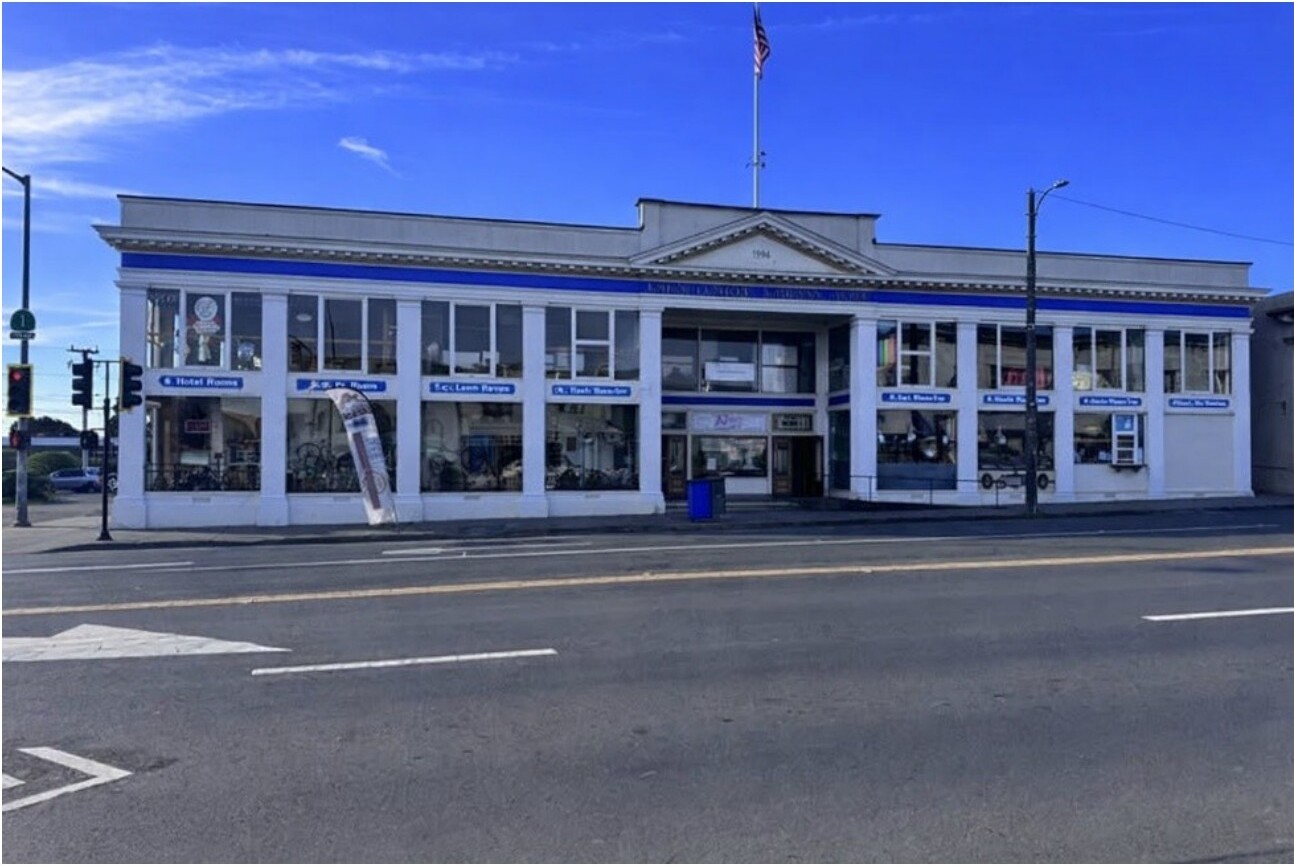
The Company Store at 301 N. Main Street is one of Fort Bragg’s best-known historic commercial buildings.
Built in 1912 by the Union Lumber Company, the building stood at the heart of a town whose daily life was closely tied to the lumber industry and the nearby mill.
For generations, the Company Store served as much more than an ordinary retail business. Community memories describe groceries, clothing, furniture, appliances, toys, feed, household goods and school clothes being sold there.
Later generations remember the building as Sea Fair and Daly’s, followed by restaurants, shops and other businesses.
Through all of those changes, the 1912 building survived and remained one of downtown Fort Bragg’s most recognizable landmarks.
Location
301 N. Main Street stands at the corner of Main Street and Redwood Avenue in the center of downtown Fort Bragg.
Its location placed the Company Store near both the commercial district and the Union Lumber Company mill complex west of Main Street.
For mill employees and their families, the store provided a convenient downtown place to purchase many everyday necessities. Its prominent corner location also helped keep the building commercially useful long after the original Company Store era ended.
History
The Union Lumber Company built the Company Store in 1912 during an important period of Fort Bragg’s growth.
The store reflected the close relationship between the lumber company and the community that developed around the mill. Generations of Fort Bragg families included mill employees, and the Company Store became an important part of everyday life for many of them.
Longtime residents remember it as a remarkably complete department store.
Community recollections describe groceries, men’s and women’s clothing, children’s clothes, furniture, appliances, toys and feed being sold in different parts of the building.
Furniture and appliances are particularly remembered upstairs, and one later recollection also places mattresses there.
For families without automobiles, the store could be especially important. One resident remembered her grandmother ordering groceries from the Company Store and having them delivered because she did not drive.
Charge accounts are also strongly remembered.
Several residents recalled mill employees using store accounts, with purchases connected in some way to their company earnings. One recollection specifically described the cost of purchases being taken from a worker’s paycheck. Because this detail comes from community memory, the exact accounting arrangement may have varied over time.
One of the store’s most clearly remembered features was its wire trolley system.
Sales counters throughout the building were connected to an upstairs bookkeeping area by wires and small carriers. Former customers and employees remembered clerks placing money, sales slips or account information into the carriers and sending them overhead to the office.
The transaction was processed upstairs, and the receipt and any change were returned to the sales counter.
Children were fascinated by the system, and many residents still remember the sight and sound of the carriers moving through the store.
Former employees recalled that the trolley system remained in use during the later Sea Fair years.
The Company Store became deeply connected to family life in Fort Bragg.
Residents remember buying first pairs of jeans, school clothes and required gym uniforms there. One particularly memorable school uniform was described as a one-piece, snap-front short overall style.
The store was also part of holiday life. One resident remembered an aunt who worked the Union Lumber Company switchboard and brought home especially attractive Christmas presents from the store’s gift-wrapping department.
Another recollection described the Company Store as carrying almost everything a family needed except meat.
For many local families, it served as Fort Bragg’s general department store.
Sea Fair
The Company Store was later succeeded by Sea Fair.
According to community memory, the Sea Fair name was selected through a naming contest and submitted by a local woman. The identity of the winner and details of the contest have not been established in the material collected so far, so that story remains part of the community’s oral history.
Sea Fair continued much of the building’s department-store tradition.
Residents remember buying clothing, school clothes, furniture and appliances there. Some also recall discounts being available to mill employees.
For many children growing up in Fort Bragg, Sea Fair became closely associated with annual school shopping.
One former employee remembered working there from about 1977 to 1980, first in ladies’ wear and later in the upstairs furniture department under Hugo Morandi. She also remembered the old wire trolley system still being used during those years.
Daly’s
Community memories consistently place Daly’s after Sea Fair in the building’s retail history.
Daly’s continued to provide clothing and other merchandise locally at a time when residents often traveled to Ukiah or Santa Rosa for a wider range of shopping.
People remember buying clothing, baby books and other merchandise there.
For many longtime residents, the sequence is remembered simply as Company Store, Sea Fair and then Daly’s.
Later Businesses
After the department-store period, the large building was adapted for a number of smaller businesses and other uses.
Community memories mention a candy store, clothing businesses, a yoga business and Living Light among the later occupants.
The building also became associated with dining and nightlife.
Mendo Bistro is remembered as operating upstairs for many years and becoming a popular place for dinners, celebrations and gatherings. One contributor recalled working there for about ten years.
Bar Below is remembered as another later business in the building.
The exact dates and sequence of some of these later occupants are not established in the material gathered so far, but together they show how the former Company Store continued to be reused as Fort Bragg changed.
Community Memories
Few Fort Bragg buildings generate memories as varied as the Company Store.
Older residents remember a large company-town department store where families could buy most of what they needed.
They remember groceries being delivered to people who did not drive, mill employees using charge accounts, families shopping for clothes and household goods, furniture and appliances upstairs, toys, feed in the back, and clerks sending transactions overhead on wires.
The trolley system remains one of the strongest shared memories.
Children watched the carriers race toward the upstairs office. Employees remember using them. Decades later, people still recall the distinctive sound they made moving through the store.
Clothing memories are just as strong.
People remember buying first pairs of jeans, school clothes and gym uniforms there. Families bought furniture and appliances, and generations of children accompanied their parents on shopping trips through the building.
Former Sea Fair employees remember the store as an important workplace where they learned retail and worked alongside longtime local residents.
Other residents remember the building’s later chapters, including Daly’s, Living Light, Bar Below and Mendo Bistro.
The businesses changed, but generations of Fort Bragg residents continued using the same 1912 building.
Timeline
1912: Union Lumber Company builds the Company Store at 301 N. Main Street.
Company Store era: The building serves as a large general department store. Community memories describe groceries, clothing, furniture, appliances, toys, feed and other household merchandise.
Company Store era: Charge accounts, grocery delivery and the overhead wire trolley system become familiar parts of shopping at the store.
Later period: The store becomes Sea Fair. Community memory says the name was selected through a naming contest.
1960s-1970s: Residents remember buying jeans, school clothes, furniture, appliances and other goods at Sea Fair.
1977-1980: One former employee remembers working in ladies’ wear and later in the upstairs furniture department while the wire trolley system was still being used.
Later period: Daly’s succeeds Sea Fair in the building.
Later years: The building is adapted for multiple businesses, with community memories including clothing and specialty shops, Living Light, Bar Below and Mendo Bistro.
Today: The 1912 Company Store building remains one of downtown Fort Bragg’s major surviving landmarks from the Union Lumber Company era.
Why It Matters
The Company Store matters because it tells the story of Fort Bragg as both a lumber town and a community.
The mill employed generations of local families, but the Company Store shows another side of that history — what everyday life looked like beyond the mill itself.
This was where families bought groceries, school clothes, furniture, appliances and Christmas presents.
It was where residents remember using charge accounts, where clerks sent money and receipts racing overhead on wires, where children watched those carriers with fascination, and where generations bought everything from first pairs of jeans to furniture for a new household.
Later names such as Sea Fair and Daly’s became important in their own right, followed by restaurants, shops and gathering places that brought new generations into the building.
More than a century after Union Lumber built it, the Company Store remains a physical link between Fort Bragg’s mill-town beginnings and the downtown community that grew around them.
Sources & Original Research
This article blends verifiable historical records with personal recollections shared by longtime Fort Bragg residents. Much of this information comes from community memory and is not available in any published source.
Original posts and photographs supplied by Gee Bee.
Community comments and memories from Erik Eduardo Hernandez, Tina Krenov, Kim Taylor, Heather Baird, Jay McMartin-Rosenquist, LePriel White, Navin Johnson, Judy Valadao, Sandra Liljeberg, Craig Johnson, Linda Cooper, Michael Duffy, Joshua Lowell, Heather Capps, Darilyn Fenech, Tori Ammerman, Curtis Deshiell, Peggy DeBrum, Linda Ransom, Shirley Hicks, Steve Av, Darrell Bailey, Sandi Zap, Violet Fox, Lisa Larkin, Ben Barnard, Guti Renteria, Chuck Ross, Clancey Kennedy, India Gingell, Elaine Bauer, Diane Williamson Swingle, Nancy Fereira, Loretta Joan Driggers, Robert Rex, Charlotte Simpson Thurman, Donna Winters and Marissa Skari.
Gee Bee’s Buildings and Businesses in Fort Bragg, California — with History archive.
InFortBragg.com
