El Yuca
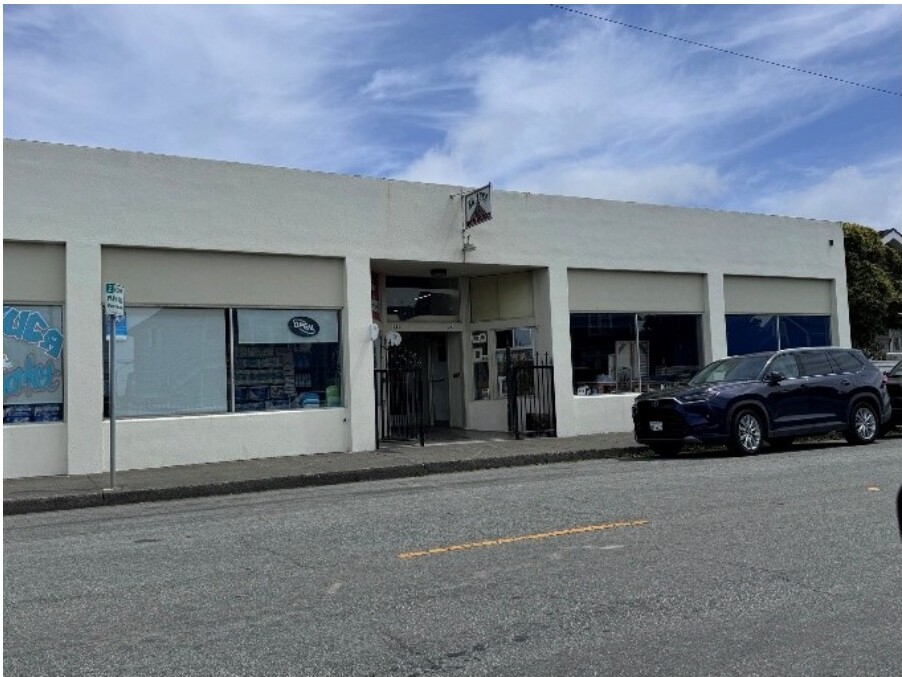
242 N. McPherson St. — A neighborhood McPherson Street building remembered as Co-op hardware, a pool hall, Paul Bunyan's Thrift Shop, AA meetings, and now El Yuca.
Last updated: July 19, 2026
A modest McPherson Street building whose history reaches from cooperative groceries and hardware to a pool hall, thrift store, community meetings, and today's neighborhood business.
Overview
Some Fort Bragg buildings do not need a large display window on Main Street to become part of the town's business memory.
The building at 242 North McPherson Street is one of them. Its location places it just outside the most visible part of downtown, but community recollections connect it with several very different chapters of Fort Bragg life.
Today the address is associated with El Yuca. Earlier generations remember the property as part of the Fort Bragg Co-op, followed by uses that included an unemployment office, an arcade or pool hall, a thrift store, and a meeting space.
Each use brought a different group of people through the doors, turning this practical neighborhood building into a small but surprisingly layered piece of local history.
Location
The building stands at 242 North McPherson Street, near East Redwood Avenue.
Unlike the businesses facing Main Street, this property served people from a quieter side of the downtown area. That location worked well for a neighborhood market, hardware department, public office, meeting room, thrift shop, and other businesses that relied more on local familiarity than passing tourist traffic.
Its connection to both McPherson Street and Redwood Avenue is also important to understanding the Co-op memories. Community recollections describe a larger operation with different departments and entrances arranged around the property.
The Fort Bragg Co-op
The earliest chapter remembered by residents is the Fort Bragg Co-op.
The McPherson Street portion of the building was recalled as the hardware department of the cooperative store during the 1950s and 1960s. Residents remembered visiting it with their parents and shopping there when the Co-op was still an important local business.
The Co-op appears to have offered much more than hardware. Community memories describe a grocery store, bakery, and butcher shop in the portion facing Redwood Avenue.
That arrangement would have made the property a practical one-stop destination. Families could purchase food, fresh bread, meat, household supplies, tools, and hardware within the same cooperative business.
The Bakery and Grocery
The bakery remained one of the strongest memories associated with the Co-op.
Residents recalled the bread as especially good and remembered that many of the employees were of Finnish descent. That detail connects the business with Fort Bragg's large Finnish community and with the cooperative traditions that were important to many Finnish immigrants and their families.
The grocery, bakery, butcher shop, and hardware department would have made the Co-op part of everyday life rather than an occasional shopping destination.
The Unemployment Office
After the Co-op closed, part of the building was remembered as housing the unemployment office.
That use marked a major change from retail business to public service, but the building continued to serve local residents with practical needs.
Instead of shopping for food or hardware, people came through the doors seeking employment assistance, filing claims, or dealing with the difficult transition between jobs.
In a town shaped by logging, fishing, construction, seasonal tourism, and changing industries, an unemployment office would have been an important local service.
Squirley's Arcade and Pool Hall
Another remembered chapter was Squirley's arcade.
Residents recalled a pool hall or arcade operating in the building during the early 1980s. The exact form of the business may have changed during its operation, but the memories consistently connect the name Squirley's with pool tables, arcade games, and a place where younger people gathered.
The building that had once sold groceries, bread, meat, and hardware became a place for games, pool, noise, and socializing. For those who spent time there, Squirley's became part of their Fort Bragg youth.
Paul Bunyan's Thrift Shop
During the 1990s, the building was remembered as Paul Bunyan's Thrift Shop.
A thrift store was another natural fit for this practical commercial space. Instead of new groceries or hardware, the shelves and rooms would have held donated clothing, household items, furniture, and inexpensive secondhand goods.
Thrift stores have long played an important role in Fort Bragg, serving families looking for affordable necessities while also giving useful items a second life. The Paul Bunyan name also suited a town whose identity was closely tied to logging and the annual Paul Bunyan Days celebration.
Community Meeting Space
One of the doors on the property was remembered as leading to a room used for Alcoholics Anonymous meetings.
That chapter may not have been advertised with a large commercial sign, but it was an important use of the building. Meeting rooms like this provide private, dependable places where people can gather regularly and support one another.
The recollection adds another dimension to the property's history. This was not only a place where things were bought, sold, or played. At times, it was also a place where people came looking for help and community.
El Yuca
Today the address is associated with El Yuca.
The current business continues the building's long tradition of neighborhood-scale commercial use. Although the products and services have changed repeatedly, the property remains a place where local residents enter from McPherson Street rather than simply passing it on Main Street.
Its present use is the latest chapter in a building that has repeatedly adapted to Fort Bragg's changing needs.
The Building Today
The building continues to operate as a neighborhood commercial property. Its simple, practical shape remains well suited to a mix of uses, and its long history of adaptation shows in how easily each new business has found a place inside.
Community Memories
The comments surrounding this property show how one building can mean very different things to different generations.
Older residents remember the Co-op, its hardware department, grocery store, butcher shop, bakery, and Finnish employees. Others remember the unemployment office that followed.
A later generation remembers pool tables, arcade games, and Squirley's. Still others remember browsing through Paul Bunyan's Thrift Shop or attending meetings through the separate door.
None of those memories alone tells the entire story. Together, they show a building that continually found a new way to remain useful.
Why It Matters
The building at 242 North McPherson Street belongs in Fort Bragg history because it served the town in so many ordinary but important ways.
It provided groceries, fresh bread, meat, tools, hardware, public assistance, recreation, affordable secondhand goods, meeting space, and newer neighborhood services.
It was never necessary for the building to be grand or decorative. Its value came from being adaptable.
For one generation, it was the old Co-op. For another, it was Squirley's. For someone else, it was the unemployment office, Paul Bunyan's Thrift Shop, an AA meeting room, or El Yuca.
That is how a modest neighborhood building becomes part of a town's shared memory — not through one famous event, but through decades of people having different reasons to walk through the same doors.
Sources & Original Research
This article blends verifiable historical records with personal recollections shared by longtime Fort Bragg residents. Much of this information comes from community memory and is not available in any published source.
Sources: Original post text and photograph supplied by Gee Bee; community discussion and contributor memories from Tammy Lowe, Ron Smoley, Rus Jewett, Mary Jewett Ricard, Nancy Fereira, Virginia McNeill, Anna Roeth, Linda Stanton, and Fred Howard.
