Fort Bragg Branch Library
499 E. Laurel St — From mortuary to library, a building that has served Fort Bragg through its hardest and most hopeful chapters.
Last updated: June 14, 2026
Overview
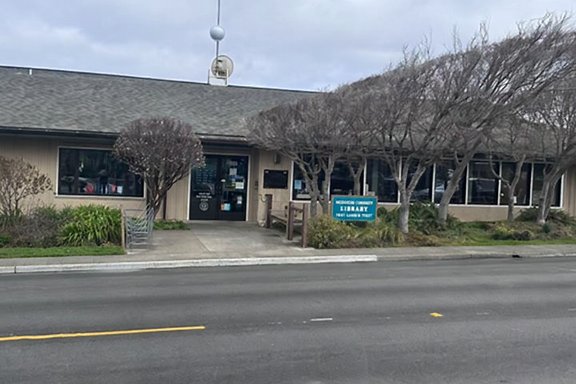
The Fort Bragg Branch Library at 499 East Laurel Street is one of those buildings that has carried more of Fort Bragg's life than its quiet exterior lets on.
Today, it is a public library: a place for books, computers, children's programs, research, internet access, paperwork, reading, community help, and shelter from the weather. But before it became a library, the building served Fort Bragg in a very different way — as a mortuary.
That change gives this address one of the more meaningful reuse stories in town. A building once tied to grief became a lasting place of learning, access, recovery, and public service.
Location
The Fort Bragg Branch Library stands at 499 East Laurel Street in Fort Bragg.
Its location places it within the older civic and residential fabric of town rather than along the highway or in a tourist-facing commercial strip. That fits the building's role well. This is a local-use place, a building people return to because they need it.
For generations, Fort Bragg has relied on buildings like this not because they are showy, but because they keep serving. The library does that quietly every day.
History
The Mendocino County Library system traces the Fort Bragg branch back to 1966, when Fort Bragg's library joined the county system. At that time, the city still owned the library building while the county operated library service.
That earlier library chapter ended suddenly on September 20, 1987, during the arson fire spree that also destroyed the Piedmont Hotel and the Ten Mile Justice Court. The loss of the old library stayed in local memory not just because a building burned, but because a public gathering place and community resource disappeared overnight.
What happened next says a lot about Fort Bragg.
The county, the city, and the Friends of the Fort Bragg Library worked together to buy and remodel the building at 499 East Laurel Street. The library reopened here on May 25, 1989.
Official library history identifies the building as a former mortuary, and that part was strongly remembered by longtime locals too. The comments brought back the human side of that earlier life: funerals held there, dark stained glass, the hearse under the awning, and youth groups touring the building when it still carried its old mortuary atmosphere.
Local memory tied the property to Fairlee-Haverfield Mortuary, with Bryan Fairlee and Byron Haverfield remembered as part of that chapter. One memory stood out especially clearly: Bryan Fairlee was remembered as a kind presence for families during hard times. Another recalled that after retirement, he performed wedding ceremonies, giving the story one of those very Fort Bragg turns — the same person connected in memory to both mourning and celebration.
After becoming the library, the building moved into another form of public service. The Fort Bragg Branch became the first branch in the Mendocino County Library system to offer public internet access in 1996, opening a new kind of doorway for the community.
A major remodel was completed in 2007 with significant support from the Friends of the Fort Bragg Library. Later, the Friends purchased the neighboring property on Whipple Street for expansion, showing again how much this library has continued to matter.
The Building Today
Today, the Fort Bragg Branch Library remains one of the town's most important public buildings.
It is a place for books, computers, children's programs, research, reading, internet access, community help, and the simple act of having somewhere warm, dry, and public to go. That last part should not be overlooked. Libraries are one of the few places left where people can walk in without having to buy anything.
The building's earlier mortuary history gives it a deeper layer. It once served people during some of the hardest moments in life. Now it serves people through learning, connection, access, and everyday support.
Same town. Same building. Different chapter.
Why It Matters
The Fort Bragg Branch Library matters because it shows how a building can carry grief, recovery, and hope across different eras.
As a mortuary, it served families during loss. As a library, it became a place of renewal: books, children, computers, public internet, research, and community connection. After the 1987 fires destroyed the old library, this building became part of the town's answer to loss.
That is why this address feels bigger than its footprint. It is not just the library building. It is a survival story. It is a reuse story. It is a reminder that Fort Bragg has often had to take what remained, rebuild around it, and keep serving the people who live here.
Some buildings are important because of what they were built to be. This one matters because of all the different ways it has helped people through life.
Sources & Original Research
This article blends verifiable historical records with personal recollections shared by longtime Fort Bragg residents. Much of this information comes from community memory and is not available in any published source.
Sources: Original post text and photo provided by Gee Bee; comment thread provided by Gee Bee, including contributor memories from Jay McMartin-Rosenquist, Nancy Fereira, Rus Jewett, Kelly Hilliard, Wendy Loomis, Heather Capps, and Marlene Placido; Friends of the Fort Bragg Library — History of the Library; Mendocino County Library — Fort Bragg Branch page; Friends of the Fort Bragg Library — History of the Expansion Project 2016–2023; Anderson Valley Advertiser coverage of the September 20, 1987 Fort Bragg fires.
