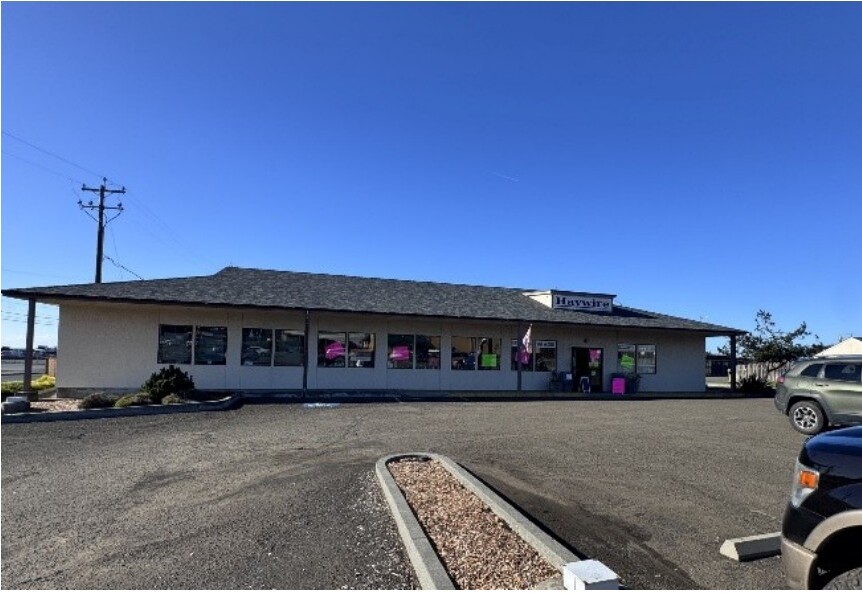
Haywire / Makela's in Fort Bragg, California
    Back to Index
    BusinessMakela family est. 1918Fort Bragg, CA

    Haywire / Makela's

    151 W. Elm St. — A longtime Fort Bragg workwear, boot, and clothing spot tied to the Makela family story, later reopened as Haywire and now closed.

    Last updated: July 22, 2026

    Overview

    Haywire / Makela's — archival photograph, Fort Bragg, California

    Some Fort Bragg stores are remembered because they were fashionable or unusual.

    This one is remembered because people bought things there that they actually needed.

    The building at 151 W. Elm Street is best known through two connected business chapters: Makela's Boots & Saddlery and Haywire.

    For years, the store served people looking for boots, work clothing, rain gear, western wear, leather-care products, equestrian supplies, and other practical merchandise. Its customers included loggers, fishermen, ranchers, horse owners, tradespeople, outdoor workers, and local families who needed clothing made for wet weather and hard use.

    Haywire later continued much of that tradition before permanently closing.

    The building now stands as a reminder of a long-running Fort Bragg retail family and the kind of working-town store that once filled an important space between a clothing shop, shoe store, saddlery, and general workwear supplier.

    History

    The Makela business traced its roots to 1918.

    That early date gives the Makela name more than a century of connection to Fort Bragg retail history, although the business did not spend all of those years at the West Elm Street building.

    Local memories place earlier Makela stores at other locations in town, including Franklin Street and another location remembered between a liquor store and Lucy's Laundry.

    People particularly remembered the old Makela shoe sign on Franklin Street.

    The movement between locations reflects the way many family businesses developed in Fort Bragg. A recognizable name could survive even when the storefront changed, carrying customers and community trust from one building to another.

    Eventually, 151 W. Elm Street became the address most strongly associated with Makela's Boots & Saddlery.

    Makela's

    Makela's was not remembered as an ordinary fashion store.

    It sold goods suited to the working and rural life of the Mendocino Coast. Boots and durable clothing were not decorative purchases for many customers. They were equipment.

    Commercial fishermen needed waterproof gear. Loggers and millworkers needed sturdy boots and clothing. Ranchers and horse owners needed saddlery and equestrian supplies. Construction workers, mechanics, gardeners, and outdoor crews needed items that could withstand mud, rain, tools, and long days.

    Makela's filled that practical role.

    The store's identity sat somewhere between a shoe shop, workwear dealer, western store, saddlery, and local department store. That broad mix made sense in a town where one customer might need logging boots, another might need rain pants, and someone else might be looking for leather supplies or horse equipment.

    The Makela Family Story

    The Makela name was an important part of the business.

    Family-operated stores often became known as much for the people behind the counter as for the merchandise on the shelves. Customers returned because they recognized the owners, trusted their recommendations, and knew the store understood local needs.

    A person buying work boots was not simply choosing a size and leaving. They might need advice about waterproofing, sole construction, durability, fit, or which boot would hold up best in the woods, on a fishing boat, or on concrete.

    That kind of knowledge gave stores like Makela's a place in everyday community life.

    The family name remained familiar even as the business changed locations and eventually passed into a new chapter.

    The Building

    The commercial building at 151 W. Elm Street was well suited to the business.

    It offered a large, open retail layout with room for clothing racks, shelves, footwear displays, supplies, and stock. Additional areas included offices, storage or supply rooms, two bathrooms, private parking, and separate utility service.

    Commercial listings have also described ADA access, heating improvements, two PG&E meters, and a newer roof.

    It is the kind of flexible commercial building that can accommodate a large retail operation without the narrow floor plan found in many older downtown storefronts.

    Its location also placed it outside the tight Main Street and Franklin Street shopping blocks, allowing more room for parking, deliveries, and larger inventory.

    Haywire

    In 2013, the business changed hands and reopened as Haywire.

    The new name gave the store a different identity, but much of its practical purpose remained.

    Haywire carried workwear, western clothing, boots, equestrian supplies, leather-care products, rain gear, and other clothing and equipment suited to the coast.

    Visit Fort Bragg described the store as carrying workwear, rain gear, and equestrian supplies. Other business listings classified it across several categories, including clothing, shoes, leather goods, and department-store merchandise.

    That mix shows how difficult it was to place Haywire into one simple retail category.

    It was not only a clothing store. It was not only a boot shop or tack store. It carried a combination of goods shaped by the needs of the community.

    Rain Gear

    Rain gear was an especially natural part of the business.

    Fort Bragg's weather has always created demand for clothing that can handle wet winters, harbor work, fishing, outdoor jobs, and coastal wind.

    Grundéns rain gear was among the products associated with Haywire. The brand is widely connected with commercial fishing and other work where staying dry is a matter of safety and comfort rather than style.

    A store carrying that kind of merchandise was serving the daily realities of the town.

    For commercial fishermen and harbor workers, waterproof clothing could be as essential as tools. For everyone else, it was still useful during the long rainy season and the kind of coastal weather that can soak ordinary clothing quickly.

    Boots and Workwear

    Boots remained central to both the Makela's and Haywire identities.

    A good pair of work boots can be one of the most important purchases made by someone who spends the day standing, lifting, climbing, walking over uneven ground, or working around water.

    The store served customers who needed practical footwear rather than something worn only occasionally.

    Work pants, jackets, gloves, hats, shirts, and other durable clothing completed that role. The merchandise reflected a Fort Bragg where many people still worked outdoors, in shops, aboard boats, in construction, in the woods, or in other physical trades.

    Western and Equestrian Supplies

    Haywire also continued the saddlery and horse-related side of the earlier business.

    Western wear and equestrian supplies connected the store with ranching, riding, and horse ownership throughout the surrounding region.

    Fort Bragg itself may be known as a coastal town, but the inland areas, rural properties, ranches, and horse communities surrounding it have always influenced local business.

    The saddlery side of Makela's and Haywire served that larger regional customer base.

    Leather-care products and related supplies also fit naturally beside boots, saddles, tack, and western clothing.

    The Closure

    Haywire has since permanently closed.

    Its social-media presence identifies the business as no longer operating, moving the store from a current retail listing into Fort Bragg memory.

    For longtime customers, the closure meant losing more than another clothing store.

    It meant losing a place where specialized products could be found locally, tried on, compared, and discussed with someone who understood how they would be used.

    When a workwear or saddlery store closes, customers often have to travel farther or order items online without being able to test the fit or inspect the quality first.

    That change is part of the wider shift affecting small-town retail.

    The Surrounding Area

    The discussion about Haywire and Makela's also brought back memories of the surrounding West Elm Street area.

    Some people remembered a carnival operating nearby before Denny's was built and before the police-station property took its present form.

    Those recollections show how one building can unlock memories of an entire neighborhood.

    A person begins by remembering a boot store, then remembers the carnival, nearby businesses, vacant land, old road patterns, and earlier uses of neighboring properties.

    That is one reason individual building histories matter. They help restore the larger map of town as people experienced it at different times.

    The Empty Building Question

    Once Haywire closed, attention shifted toward what might happen to the building next.

    Commercial listings describe the property as a substantial retail or commercial space with an open floor plan, offices, supply rooms, private parking, updated features, and enough flexibility for several possible uses.

    Its land use has been identified as a store building, with Highway Commercial zoning associated with the property in commercial listings.

    Any future use would still be subject to City of Fort Bragg zoning, building, accessibility, parking, safety, and development requirements.

    Community discussion reflected a familiar concern: an empty building may look full of possibility, but converting it into a successful new business can be difficult.

    Costs, permits, zoning, insurance, repairs, financing, and the size of the local customer base can all affect whether a new operation can move in.

    What Could Come Next

    The building invites people to imagine another use because it is large, visible, and already designed for commercial activity.

    Its open interior could potentially support retail, services, offices, light production, community use, or another business requiring a combination of showroom and storage space.

    However, the right use would need to fit both the property and the realities of Fort Bragg's economy.

    That question remains open.

    For now, the building is remembered most clearly through the businesses that already gave it an identity.

    Community Memory

    The Makela's and Haywire memories are tied strongly to practical shopping.

    People remember boots, clothing, horse supplies, rain gear, workwear, and the familiar name of a family business that had been part of Fort Bragg since 1918.

    Other comments expanded the story beyond the store, recalling earlier Makela locations, the surrounding neighborhood, the nearby carnival, and the difficulty of bringing new commerce into vacant buildings.

    Those memories show that the history of the property is not limited to one address.

    The story reaches back through different Makela storefronts and forward into the uncertain future of the West Elm Street building.

    Why It Matters

    Haywire and Makela's belong in Fort Bragg history because they represent a kind of local store that was built around the actual work and weather of the community.

    The shelves held things people depended on: boots for long shifts, rain gear for wet days, work clothes that could take abuse, leather products, saddlery supplies, and clothing for people whose lives did not always fit into ordinary retail categories.

    The Makela family name connected several locations and generations of customers. Haywire carried much of that tradition forward after taking over in 2013.

    Now that the store has closed, 151 W. Elm Street raises the same question faced by many vacant commercial properties in town.

    What comes next?

    Whatever eventually occupies the building, the Makela's and Haywire chapters will remain part of its identity — a long Fort Bragg story built around boots, work, weather, horses, family business, and the practical things people needed to get through the day.

    Sources & Original Research

    This article blends verifiable historical records with personal recollections shared by longtime Fort Bragg residents. Much of this information comes from community memory and is not available in any published source.

    Original research post and discussion: https://www.facebook.com/media/set/?set=a.10153269104881177&type=3

    Sources: Original post text and photograph provided by Gee Bee; community discussion and contributor memories; Visit Fort Bragg listing for Haywire; Haywire Inc. Facebook and Instagram pages; Nextdoor and Locally business listings for Haywire Inc.; Manta and CMAC listings for Makela's Boots & Saddlery; LoopNet property records for 151 W. Elm Street; Berkshire Hathaway HomeServices commercial listing for 151 W. Elm Street; City of Fort Bragg General Plan and Zoning Information; City of Fort Bragg Inland Land Use and Development Code. Contributors: Joe Wagner, Heather Capps, Natasha Rob, Lauralee Brown, Heather Baird, Steve Av, Mallory Nowak, and Rain Waters.