Pacific Rim Seafood
32310 N. Harbor Drive — A diver-owned sea urchin processing company established in 1999, part of Noyo Harbor's working commercial seafood infrastructure.
Last updated: September 7, 2026
Overview
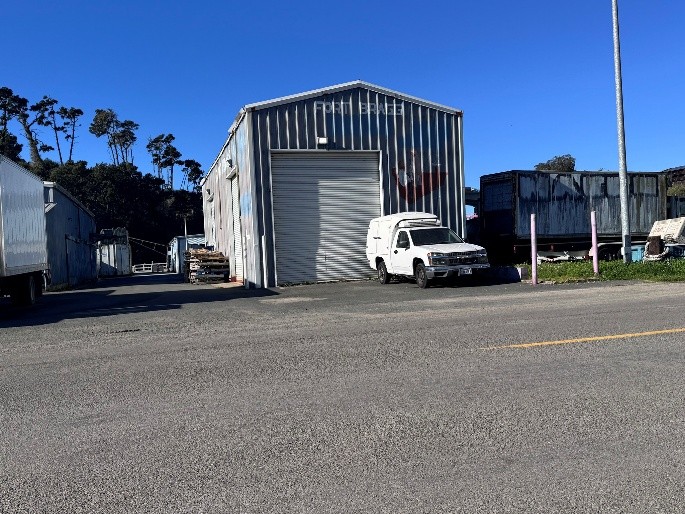
Pacific Rim Seafood belongs to the working side of Noyo Harbor.
The building is practical rather than decorative: corrugated metal, large roll-up doors, loading areas, pallets, trucks, and space designed around receiving, processing, packing, storing, and moving seafood.
Pacific Rim Seafood identifies itself as a diver-owned sea urchin processing company established in 1999 by Tom Trumper.
Its history connects the business to the North Coast commercial diving and seafood-processing industry that continues to distinguish Noyo Harbor as a working waterfront.
Location
Pacific Rim Seafood is located at 32310 N. Harbor Drive in Fort Bragg.
The property sits within the commercial and marine-industrial portion of Noyo Harbor, near the infrastructure that supports fishing, seafood processing, boat work, storage, transportation, fuel, ice, and distribution.
Its location close to the harbor allows seafood to move efficiently from boats and receiving areas into processing, refrigeration, packing, storage, and transportation.
History
Pacific Rim Seafood was established in 1999 by Tom Trumper as a diver-owned seafood company specializing in sea urchin.
The business developed within the North Coast commercial urchin industry, which depends on several specialized stages of work.
Divers harvest the urchins. Boats bring them ashore. Processing facilities receive the catch and prepare it for market through cleaning, sorting, packing, refrigeration, storage, and shipment.
Pacific Rim Seafood represents an important part of that processing chain.
Its history is therefore tied not only to a single business, but also to the larger commercial diving and seafood economy of the Mendocino Coast.
The Sea Urchin Trade
Sea urchin is a specialized seafood product requiring careful handling.
The edible roe, commonly marketed as uni, must be removed from the shell, cleaned, sorted, packed, and kept properly chilled.
That process requires experienced workers, reliable refrigeration, and facilities designed for seafood handling.
As a diver-owned operation, Pacific Rim Seafood also represents a direct connection between harvesting and processing.
Knowledge of the product begins underwater and continues through preparation for market.
A Working Harbor Facility
The Pacific Rim Seafood building reflects its purpose.
Corrugated metal siding, industrial doors, loading access, open work areas, trucks, pallets, and equipment are all part of the practical architecture of a working waterfront.
Buildings like this are shaped by salt air, weather, refrigeration equipment, deliveries, forklifts, maintenance, and the constant movement of product.
Their value lies in what they allow the harbor economy to do.
Processing and Distribution
Commercial fishing depends on much more than boats and fishermen.
Once seafood comes ashore, it may need to be weighed, sorted, cleaned, processed, packed, refrigerated, stored, loaded, and transported.
Without those services, much of the economic value associated with a commercial fishing fleet can move outside the harbor.
Pacific Rim Seafood helps provide the link between harvested seafood and the markets that ultimately receive it.
That makes seafood-processing facilities an essential part of Noyo Harbor's infrastructure even though much of their work takes place away from public view.
Continuing Urchin Work
Pacific Rim Seafood has remained connected to the North Coast sea urchin industry as that industry has changed.
Reporting on experimental uses for North Coast urchins has identified Dave Rudie as a partner in Pacific Rim Seafood and described larger-scale urchin processing in the north harbor.
The broader urchin industry has changed with ocean conditions, kelp loss, market demand, environmental concerns, and new efforts to find productive uses for abundant sea urchins.
Businesses such as Pacific Rim Seafood therefore sit at the intersection of traditional commercial fishing and newer efforts to adapt the industry to changing ocean conditions and markets.
The Building Today
Pacific Rim Seafood continues to represent the industrial seafood-processing side of Noyo Harbor.
Visitors may notice fishing boats, restaurants, docks, and harbor views first, but businesses like this show what happens after the catch leaves the boat.
Seafood moves through receiving areas, processing rooms, refrigeration, packing stations, storage areas, trucks, and distribution networks.
That less-visible work is one of the things that keeps Noyo Harbor functioning as a commercial harbor rather than simply a scenic waterfront.
Community Memories
The community replies associated with the original post did not add new ownership or business-history details.
One person expressed appreciation for the Buildings and Businesses history posts, while another commented on the beautiful day shown in the original photograph.
Those responses reflect the broader purpose of the project: documenting not only famous landmarks and longtime restaurants, but also ordinary working buildings that remain essential to the harbor.
Timeline
1999 – Pacific Rim Seafood is established by Tom Trumper as a diver-owned seafood company specializing in sea urchin.
Later years – The company continues operating as part of Noyo Harbor's commercial seafood-processing infrastructure.
Recent reporting – Dave Rudie is identified as a partner in Pacific Rim Seafood in reporting concerning North Coast sea urchin processing and experimental uses.
Present – Pacific Rim Seafood remains associated with sea urchin processing and the working commercial seafood economy of Noyo Harbor.
Why It Matters
Pacific Rim Seafood represents an important part of the infrastructure behind Noyo Harbor's fishing industry.
A functioning commercial harbor needs more than boats and docks. It needs processing facilities, refrigeration, cold storage, ice, fuel, mechanics, boat yards, gear suppliers, transportation, and businesses capable of handling seafood after it comes ashore.
Pacific Rim Seafood is part of that system.
Its story also represents the specialized knowledge behind the North Coast sea urchin trade, from commercial diving and harvesting through processing, packing, refrigeration, and distribution.
The building may look plain, but its plainness reflects its purpose.
It was built to work.
Sources & Original Research
This article blends verifiable historical records with personal recollections shared by longtime Fort Bragg residents. Much of this information comes from community memory and is not available in any published source.
This history combines documented business information with original research and community material gathered through the Buildings and Businesses with History project.
Community comments are treated as local recollection unless independently supported by published or institutional sources.
Sources: Original photograph, post text, and research provided by Gee Bee; InFortBragg.com Pacific Rim Seafood research and web version; Pacific Rim Seafood business materials concerning its founding, diver ownership, and sea urchin processing; Mendocino Coast Chamber of Commerce directory listing for Pacific Rim Seafood; Federal Motor Carrier Safety Administration company information; KZYX reporting concerning Pacific Rim Seafood, Dave Rudie, and North Coast sea urchin processing and experimental use; original Facebook discussion and replies from Stephanie Jo Scotillo and Kimberly Walker.
The earlier history of the 32310 N. Harbor Drive property before Pacific Rim Seafood was established remains an open part of the story.
