Point Cabrillo Light Station
13800 Point Cabrillo Drive, Mendocino — A low white lighthouse and historic station buildings on a windswept headland between Mendocino and Caspar, with one of the coast's great Fresnel lenses and generations of keepers, volunteers, and returning visitors.
Last updated: July 27, 2026
Overview
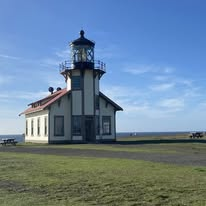
Some buildings are designed to welcome people through the front door. This one was built to speak to ships miles out at sea.
Standing on a windswept headland between Mendocino and Caspar, the Point Cabrillo Light Station is one of the Mendocino Coast's best-known landmarks. The low white lighthouse building, red roof, lantern room, surrounding station buildings, open grassland, and wide ocean view make it one of those places that seems to belong exactly where it is.
The station does not rise from a tall tower like many traditional lighthouses. Instead, the lighthouse sits low on the bluff, with the lantern room rising from the roof of the main building. That compact shape gives Point Cabrillo a character all its own. It feels less like a solitary tower and more like a small working coastal compound built to withstand wind, fog, rain, salt air, and the constant force of the Pacific.
Location
13800 Point Cabrillo Drive sits on a headland between Mendocino and Caspar, reached through an open coastal preserve rather than a parking lot.
History
The light station was created because this stretch of coastline demanded it. Ships traveling along the Mendocino Coast faced rocky headlands, hidden reefs, fog, rough weather, and few places of shelter. A dependable light at Point Cabrillo gave mariners an important navigational reference between the larger ports to the north and south.
The station included more than the lighthouse itself. Keepers and their families lived nearby, maintaining the light, cleaning the lens, watching the weather, keeping equipment in order, and carrying out the repetitive daily work required to make sure the signal remained dependable. The surrounding residences and support buildings are part of the story because a lighthouse was never just a lamp. It was a workplace, a home, and a small isolated community.
The Lens
The lens is one of the station's most memorable features. Visitors are often struck by its size, precision, and beauty. What looks decorative today was once highly practical technology, carefully designed to gather and project light far out across the ocean. Lens tours give people a chance to see that craftsmanship up close and understand how much care went into keeping the light operating.
The Building Today
Today, Point Cabrillo is valued as a historic site, a working navigational landmark, a preserve, and a place where people can experience the Mendocino Coast at its most recognizable. The buildings, lens, ocean views, volunteer programs, and public tours all work together to keep the station active rather than frozen in the past.
The walk to the station is part of the experience. The lighthouse is not hidden behind a parking lot or surrounded by modern commercial buildings. Visitors approach through the open preserve, gradually seeing the ocean, the station buildings, and the headland come into view. That distance helps preserve the feeling that the light station still belongs to the landscape rather than simply sitting beside it.
Why It Matters
Point Cabrillo belongs in this history project not simply as an attractive lighthouse or a familiar postcard view. It represents the dangerous coastal shipping routes that made a navigational light necessary, the keepers and families who lived and worked on the headland, the volunteers who helped preserve it, and the generations of visitors who continue to walk out to the point whenever they return to the coast.
Some landmarks become important because they stand above a town. Point Cabrillo became important because it stood at the edge of the land, sending its message outward into the dark.
Community Memories
For many people, Point Cabrillo is a place they return to again and again. Some visit whenever they come to the Mendocino Coast. Others walk out for the ocean views, wildlife, historic buildings, and the quiet of the headland. Even people who have been there many times still describe another visit as a joy.
The station has also built a strong community of volunteers. People have helped welcome visitors, care for the site, interpret its history, lead tours, and preserve the buildings and landscape. One former volunteer remembered the experience fondly and still keeps a framed photograph of the lighthouse taken by her son in her living room. That kind of personal connection shows how the station becomes more than a sightseeing stop — for volunteers and repeat visitors, it becomes part of their own coastal history.
Photographs of Point Cabrillo often end up framed on walls because the place has such a recognizable shape and setting. The white walls and red roof stand sharply against blue water, gray fog, green grass, or a dark winter sky. The view changes constantly, but the lighthouse remains the fixed point in the scene.
Timeline
Early coastal shipping era — Rocky headlands, hidden reefs, fog, and rough weather along the Mendocino Coast create a need for a dependable navigational light between the larger ports to the north and south.
Station era — The Point Cabrillo Light Station is established with a low lighthouse building, lantern room, Fresnel lens, keepers' residences, and support structures; keepers and their families live and work on the headland.
Preservation era — The station and surrounding land become a state historic park and preserve, with volunteers helping welcome visitors, lead tours, and care for the site.
Today — Point Cabrillo operates as a historic site, working navigational landmark, and preserve, with lens tours, public access through the surrounding preserve, and an active volunteer community.
Sources & Original Research
This article blends verifiable historical records with personal recollections shared by longtime Fort Bragg residents. Much of this information comes from community memory and is not available in any published source.
This article blends verifiable historical records with personal recollections shared by Mendocino Coast residents and visitors. Some of the personal details come from community memory and are not available in published sources.
Sources: Original post text and comment thread supplied by Gee Bee, including contributor memories from Elaine Bauer, Christee Coleman, Jo-Ann Allison, Donna Hargreaves-Murray, Pat Schuette Williams, and Debbie Workman; Point Cabrillo Light Station and Preserve historical and visitor information; California State Parks information for Point Cabrillo Light Station State Historic Park; United States Coast Guard historical information concerning the station and navigational light.
