Thanksgiving Coffee Company
19100 S. Harbor Drive — A Mendocino Coast coffee company founded in 1972 that grew from a 25-pound roaster into a nationally known specialty roaster while keeping its production roots beside Noyo Harbor.
Last updated: October 20, 2026
Overview
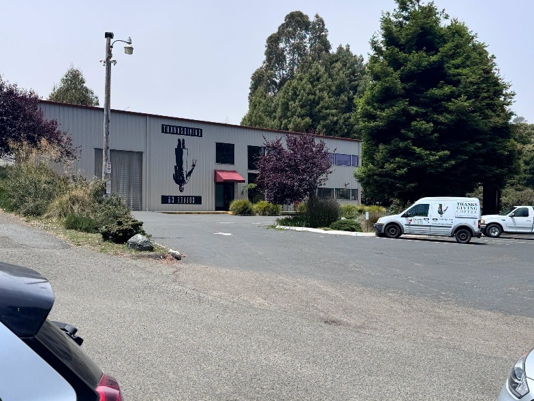
Thanksgiving Coffee Company has been part of the Mendocino Coast since 1972.
Paul and Joan Katzeff began with a small 25-pound roaster at the Mendocino Hotel. From those beginnings, Thanksgiving Coffee grew into a specialty coffee company whose products traveled far beyond the North Coast.
Today the company roasts, packages, and ships coffee from its longtime facility at 19100 S. Harbor Drive near Noyo Harbor.
Location
Thanksgiving Coffee Company is located at 19100 S. Harbor Drive on the south side of Noyo Harbor.
Although coffee roasting is different from the fishing and marine trades surrounding it, the business fits the working-harbor setting. Its operation depends on equipment, raw materials, production, packaging, shipping, and delivery.
Nearby residents also know the business by its smell. When the wind is right, the aroma of roasting coffee can drift strongly through the South Harbor neighborhood.
History
Thanksgiving Coffee began in 1972 when Paul and Joan Katzeff installed a 25-pound roaster at the Mendocino Hotel.
The company later moved its roasting operation to Noyo Harbor, where it became one of Fort Bragg's best-known production businesses.
As the specialty-coffee industry developed, Thanksgiving Coffee became increasingly involved in sustainable sourcing and the economic conditions facing coffee farmers.
Paul Katzeff helped found the Specialty Coffee Association of America in 1982. A 1985 trip to Nicaragua further shaped the company's emphasis on long-term relationships with growers and socially responsible coffee sourcing.
That philosophy became closely associated with the company's longtime message, "Not Just a Cup, But a Just Cup."
Thanksgiving Coffee later developed organic, shade-grown, Fair Trade, and conservation-oriented coffees while continuing to roast and ship from Fort Bragg.
Earlier South Harbor Drive History
Community memories suggest an earlier restaurant chapter somewhere in this part of South Harbor Drive.
Several recollections place the Noyo River Inn on South Harbor Drive during the 1970s. A former employee remembered working there as a young busgirl, and advertising and postcard material shared in the discussion also identifies the Noyo River Inn with South Harbor Drive.
Another memory recalls a later restaurant at or near the Thanksgiving Coffee location, remembered by a name sounding something like "Molfinos," and remembered as a pleasant breakfast-and-coffee spot.
The exact address and sequence of these earlier businesses have not yet been firmly documented, nor has a direct connection between the Noyo River Inn and the present Thanksgiving Coffee property been confirmed.
The earlier history remains an open part of the story.
Community Memories
For nearby residents, one of the strongest memories is the smell of coffee roasting.
When the wind comes from the right direction, the aroma can spread through the South Harbor neighborhood and make it obvious that roasting is underway.
Longtime customers also remember particular blends becoming family traditions. One family has stocked up on Mocha Java since the 1990s.
Other memories reach back to restaurant activity along South Harbor Drive and former employees trying to reconstruct the names and order of businesses that once operated there.
Timeline
1972 — Paul and Joan Katzeff establish Thanksgiving Coffee Company on the Mendocino Coast using a 25-pound roaster at the Mendocino Hotel.
1970s — Community memories place the Noyo River Inn on South Harbor Drive. Its exact relationship to 19100 S. Harbor Drive remains unconfirmed.
1982 — Paul Katzeff helps found the Specialty Coffee Association of America.
1985 — A trip to Nicaragua strengthens Thanksgiving Coffee's focus on coffee farmers and responsible sourcing.
Early 1990s — Thanksgiving Coffee develops organic coffee offerings.
1996 — The company introduces a shade-grown coffee line.
Late 1990s–2000 — Thanksgiving Coffee becomes an early participant in Fair Trade-certified coffee.
2017 — Roast Magazine names Thanksgiving Coffee its Roaster of the Year.
Today — Thanksgiving Coffee continues roasting, packaging, and shipping coffee from 19100 S. Harbor Drive.
Why It Matters
No separate significance statement is documented in the existing text.
Sources & Original Research
This article blends verifiable historical records with personal recollections shared by longtime Fort Bragg residents. Much of this information comes from community memory and is not available in any published source.
Sources: Original post text and Facebook comment thread supplied by Gee Bee, including contributor memories from Sarah Ginskey, Jay McMartin-Rosenquist, Tina Krenov, and Jim Smith; Thanksgiving Coffee Company official history, Our Story, Founders, Sustainability, and company information; Thanksgiving Coffee Company business and historical address records; U.S. Securities and Exchange Commission records documenting 19100 South Harbor Drive as the company's principal executive address.
