Salmon Trollers Marketing Association (STMA)
19292 S. Harbor Dr. — A practical Noyo Harbor hall with more than seven decades of history representing local fishermen, supporting safety, and helping launch the Salmon BBQ tradition.
Last updated: September 8, 2026
Overview
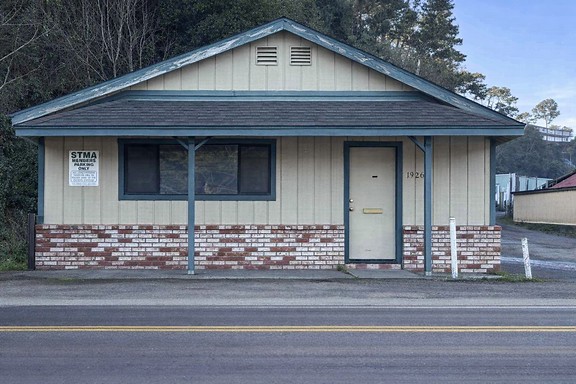
The Salmon Trollers Marketing Association building is easy to pass without noticing.
It is a small, practical harbor hall rather than a storefront or visitor attraction, and the “STMA Members Parking Only” sign gives away its purpose.
The Salmon Trollers Marketing Association, generally known as STMA, was established in 1953 to represent fishermen's interests and give Fort Bragg's salmon trolling fleet a collective voice.
Location
The STMA hall is located at 19292 S. Harbor Dr. in Noyo Harbor.
Community discussion helped correct an earlier identification of the location as Ellison Street.
The hall sits among the docks, seafood operations, marine businesses, repair facilities, and other services supporting Noyo Harbor's commercial fishing fleet.
History
STMA was established in 1953 when salmon trolling was an important part of Noyo Harbor's economy.
Independent fishermen shared many of the same concerns — prices, fishing seasons, regulations, harbor access, safety, marketing, and the future of the fishery. STMA gave them an organization through which they could address those issues together.
The association's activities also reached beyond the docks. Community memory recalls STMA sponsoring a local Little League team and helping establish Fort Bragg's Salmon BBQ tradition.
The Salmon BBQ
STMA is remembered as one of the organizations behind the beginnings of Fort Bragg's Salmon BBQ.
Association members contributed salmon and supported the early barbecue effort, which eventually developed into the World's Largest Salmon BBQ.
The event became an enduring link between Fort Bragg's commercial fishing fleet and the wider community.
Fishing Safety and Harbor Support
The STMA hall has also been used for commercial fishing safety programs.
California Sea Grant has listed the South Harbor Drive location for fishing first-aid and safety training, while Noyo Harbor Commission records identify the property as the STMA hall.
These uses reflect the association's continuing role as a practical resource for fishermen working out of Noyo Harbor.
The Building Today
The STMA building remains simple and functional.
Its significance comes not from its architecture but from its role as a place for meetings, training, fishing-industry discussions, and other activities supporting the commercial fleet.
It represents an important part of harbor life that is easy to overlook — fishermen organizing on shore to deal with the shared challenges of making a living at sea.
Community Memories
Community memories helped correct the building's location to South Harbor Drive and added two particularly important pieces of STMA history.
The association is remembered for sponsoring a Fort Bragg Little League team and for helping start the Salmon BBQ.
Those recollections show that STMA's influence extended beyond commercial fishing into everyday Fort Bragg community life.
Timeline
1953 — Salmon Trollers Marketing Association established to represent local fishermen and their interests.
Later decades — STMA becomes an established part of Noyo Harbor's commercial fishing community.
Community era — Association remembered for sponsoring a Fort Bragg Little League team.
Salmon BBQ era — STMA members help establish the community salmon barbecue tradition that grows into the World's Largest Salmon BBQ.
Later years — STMA hall used for commercial fishing first-aid and safety programs.
Present — STMA and its hall remain part of Noyo Harbor's commercial fishing network.
Sources & Original Research
This article blends verifiable historical records with personal recollections shared by longtime Fort Bragg residents. Much of this information comes from community memory and is not available in any published source.
This article combines documented fishing-community information with memories shared through the original Buildings and Businesses discussion. Community recollections preserve parts of STMA's local role that may not appear in formal records.
Sources: Original research post and photograph provided by Gee Bee; comment thread provided by Gee Bee including memories from Donna Winters, Denis Tone, Rain Waters, and Gee Bee; California Sea Grant commercial fishing first-aid and safety training information; Noyo Harbor Commission records; California North Coast fishing-community historical material; Noyo Center for Marine Science commercial fishing information; Fort Bragg World's Largest Salmon BBQ history material.
